Sunday, May 29, 2005

Exposing the Satanic Life and Lies of Western History


Hagos Alemayehu discusses and signs his book at Borders,
Live Free: Exposing the Satanic Life and Lies of Western History, published by Signature Book Printing, Inc.
June 4, 2005 2:00 PM
8518 Fenton Street
Silver Spring, MD
Phone:301.585.0550

Twenty Years Later, Philly to Host Another Live Aid

Two decades after the original Live Aid, when rock stars descended on Philadelphia and London to raise money for Ethiopian famine relief, singer-activist Bob Geldof is planning another star-studded, humanitarian event.

Live 8 is set for Saturday, July 2, on the Benjamin Franklin Parkway, a city spokeswoman said. The event will coincide with a second show in London, publicist Laura Perez told The Philadelphia Inquirer for Sunday's editions.

Details, including the lineup and other possible venues, remain secret. They are expected to be unveiled Tuesday morning at joint press conferences in Philadelphia and London, according to Perez, who is handling the press event.

The name "Live 8" is a nod to the G-8 summit, a meeting of the world's leading powers, set to start days later in Scotland. Geldof has pressed for the world's wealthiest countries to do more to fight famine and poverty in Africa.

Live Aid, held July 13, 1985 at the former JFK Stadium in South Philadelphia, brought Mick Jagger, Madonna, Tina Turner and other stars to town while others performed at Wembley Stadium in London. The effort raised tens of millions of dollars for Ethiopia.

"What started 20 years ago is coming to a political point in a few weeks," Geldof told the BBC on Thursday. "There's more than a chance that the boys and girls with guitars will finally get to turn the world on its axis."

The singer Sting has confirmed that he will take part in the event.

"Bob called me up and said I was doing it," Sting said. "He doesn't ask you, he tells you."

The concert will add to an already packed holiday weekend in Philadelphia, where an AIDS-relief concert headlined by Elton John is set for July 4 on the parkway, and three nights of varied lineups are scheduled at Penn's Landing beside the Delaware River. The Philadelphia Orchestra is scheduled there on July 1 and Ruben Studdard and Stephanie Mills on July 2.

City officials hope tourists might extend their planned stays to take in Live 8, the Elton John concert and other events.

"This will really enhance our Fourth of July," said Deborah Bolling, a spokeswoman to Mayor John F. Street.

Philly.com

Rally Planned in Berlin Against EPRDF

There will be Demonstration in Berlin, Germany by supporters of CUD & UEDF against the EPRDF regime!

Date: Thursday, June 2, 2005
Time: 8 AM
Place: Department of German Foreign Affairs
City: Berlin

All Ethiopians who support the democratic movement in Ethiopia against the ethnic based weyane regime should attend.

Buses are organized from Koeln, Frankfurt, Munich, Hannover etc....
As received from insider information, it has been announced that the EPRDF foreign Minister, Seyoum Mesfin is arriving on the above date to Berlin from Ethiopia to speak with German government officials. This demonstration serves as a huge embarassement for the Weyane Minister and the EPRDF regime.

The demonstration also has a straight message against the dictatorial regime in Addis and to say enough is enough!

Please tell to your friends, brothers and sisters !

For more information and to register for the Bus ,
PLEASE call +49 173 667 5974, +49 2051 807 603,
+49 173 812 5326, +49 176 244 66416,
+49 152 05221515

Ethiopian Opposition Rejects Ruling Party's "Victory Claim"

Ethiopia's leading opposition parties on Saturday rejected the ruling party's "victory claim," saying nothing would change the situation before the outcome of investigations into widespread rigging were known.

The Coalition for Unity and Democracy (CUD) and the United Ethiopian Democratic Forces (UEDF) have accused the ruling party of Prime Minister Meles Zenawi of irregularities in 159 constituencies some of which have now been listed as seats won by the ruling party.

The National Electoral Board (NEB), which the European Union has already disqualified as having "lost control of vote counting," said on Saturday the governing group had won 271 of 524 seats.

Basking in the afterglow of election victory which, among others, denied the ruling party of all 23 seats in the nation's capital, CUD dismisses the electoral board's latest report as unsubstantiated.

"We've already submitted substantial evidences of rigging in 139 constituencies. Any claim of winning the elections will not be accepted before the irregularities are investigated," CUD spokesman Debebe Eshetu told Ethiomedia.com by phone. "What has been stipulated in the electoral law was to release the final outcome of the elections on June 8. Now what they are doing is releasing bits and pieces in a bid to confuse the Ethiopian people and weaken the spirit of the opposition. We see this approach as an obsolete strategy which would have no meaning in our times."

Backing up CUD's protest, United Ethiopian Democratic Forces (UEDF) Vice President Beyene Petros told AFP: "Since some of the seats that went to the EPRDF are contested by us, we need to have a ruling on our objections before accepting these results."

ethiomedia.com

Girls Into Wives

The Central Highlands of Ethiopia — Tihun Nebiyu the goat herder doesn't want to marry. She is adamant about this. But in her village nobody heeds the opinions of headstrong little girls.

That's why she's kneeling in the filigreed shade of her favorite thorn tree, dropping beetles down her dress. Magic beetles.

“When they bite you here — ” Tihun explains gravely, pressing the scrabbling insects into her chest through the fabric of her tattered smock “ — it makes your breasts grow.”

This is Tihun's own wishful brand of sorcery — a child's desperate measure to turn herself into an adult. Then maybe, just maybe, her family would respect her wishes not to wed. She could rebuff the strange man her papa has chosen to be her husband. And she wouldn't have to bear his dumb babies.

Tihun kneels in the dirt, eyes closed: an elfin figure whose smile is made goofily endearing by two missing front teeth. Seconds pass. But nothing happens. Eventually, she starts to giggle. The beetles have escaped — by crawling up her neck.

“It doesn't work!” Tihun says, disgusted. She heaves an exaggerated sigh and squints out across the yellow-grass hills surrounding her world: “I will just have to run.”

But this is childish bluster. Tihun's short legs can't carry her away fast enough from the death of her childhood. Her wedding is five days away. And she is 7 years old.

Children no more

There are, according to child-rights activists, an estimated 50 million Tihuns scattered across the world: young teen or even preteen girls whose innocence is being sacrificed to arranged marriages, often to older men.

Kansas City Star

Ethiopia's Ruling Coalition Hangs on to Power

Ethiopia's ruling coalition and its allied parties hung on to an absolute majority in the 547-seat parliament, but the opposition made major gains in the May 15 elections, according to provisional results released by the national electoral commission.

According to returns from 453 constituencies, the ruling Ethiopian People's Revolutionary Democratic Front (EPRDF) led by Prime Minister Meles Zenawi won 271 seats, down from 481 in the last parliament, and allied parties took another 14 in the legislative polls.

This gives the ruling coalition and allied parties 285 seats, well above the absolute majority of 274 in the federal parliament.

The EPRDF may yet win an absolute majority on its own but this will not be known until Sunday, said Getahun Amongne, a spokesman for the the National Electoral Board of Ethiopia (NEBE).

According to returns from 453 constituencies, the ruling Ethiopian People's Revolutionary Democratic Front (EPRDF) led by Prime Minister Meles Zenawi won 271 seats, down from 481 in the last parliament, and allied parties took another 14 in the legislative polls.

This gives the ruling coalition and allied parties 285 seats, well above the absolute majority of 274 in the federal parliament.

The EPRDF may yet win an absolute majority on its own but this will not be known until Sunday, said Getahun Amongne, a spokesman for the the National Electoral Board of Ethiopia (NEBE).

If confirmed, the electoral victory would be the third for Meles who came to power in 1991 after overturning communist dictator Colonel Mengistu Haile Mariam.

The country's two main opposition groups, which held only 12 seats in parliament before the election, were credited with 166 seats, and the remaining seat went to an independent.

These groups, the Coalition for Unity and Democracy (CUD) and the United Ethiopian Democratic Front (UEDF), have complained of irregularities during the elections with the CUD threatening not to take up its seats unless there is an investigation by the NEBE.

The UEDF refused Saturday to accept the latest election results saying it would need to wait until its complaints of electoral irregularities were investigated.

AFP/Yahoo! News

Election Timeline

March 23
The European Union will be sending too few elections observers and too late to ensure free and fair elections in Ethiopia, an opposition leader said, adding that the government has already taken steps to guarantee the ruling party a victory. The first of 159 EU election observers arrived over the weekend, the first outsiders to officially monitor balloting in Ethiopia.

March 25
Meles Zenawi's parliament endorsed the People's Republic of China's anti-secession law on Taiwan. But the foundation of the Ethiopian constitution, to be more exact, the Meles Zenawi constitution, is based on what the prime minister has been saying is the universal right of "nations and nationalities to self-determination up to secession."

April 20
Over 30 nongovernment organizations (NGOs) and civil society organizations (CSOs) working in Ethiopia announced they are to sue the National Electoral Board of Ethiopia (NEBE) over a new directive, excluding some of them from sending domestic observers.

Ethiopians in the United States staged a rally in Washington DC to protest against government expulsions of three U.S. democracy groups and the rising tide of government attacks on members of the opposition parties in Ethiopia, rally organizers have announced in a press release.

April 30
Ethiopia's largest opposition group accused security forces on Wednesday of killing eight of their supporters and arresting 240 during a campaign to scare their supporters ahead of May 15 elections.

May 1
Reacting to Sheikh Mohamed al-Amoudi's campaign speech during a ceremony to lay a foundation stone for St George's stadium, Dr Beyene Petros, the deputy chairman of the Ethiopian United Democratic Forces (EUDF), has said "he needs Sheikh Mohamed's investment. However, there must be somebody misleading him. It would have been better for him if he had played a neutral role."

May 5
A UN spokeswoman in Ethiopia warned that 136,000 children were severely malnourished and that this figure could double over the next few months. The announcement comes despite an announcement in January that Ethiopia, backed by UN agencies, had enjoyed a bumper harvest last year. Some aid workers now say these figures were inflated for political reasons.

May 12
Ethiopia's prime minister warns of the danger posed by a "very active al-Qaida cell" in Somalia's capital and said a stable government is the best way to eliminate the terrorist threat in the chaotic Horn of Africa country.

May 17
International poll monitors lauded the conduct of the election, questioned some opposition complaints and former US president Jimmy Carter brushed aside Meles' ban on demonstrations in the capital. Carter, who led a team of 50 observers, said he was satisfied with the explanation for the ban given to him by the prime minister who he said was concerned that opposition success in the capital might spark violence.

May 25
The opposition United Ethiopian Democratic Forces (UEDF) said on the ruling party was destroying ballot boxes for a possible recount in constituencies where it had been defeated, and called on the other opposition parties to forge unity for a joint action.

May 25
Ethiopia's electoral board appears to have lost control of the vote counting for the May 15 legislative polls, European Union election observers said in a report obtained by the Associated Press Wednesday.

May 26
Leaders of an estimated 15,000 protesting Ethiopians met with United States State Department officials on Thursday over Ethiopian government actions designed to reverse outcome of elections held on May 15 in the African nation.

May 27
Days after declaring a state of emergency, Zenawi has ordered a militia group called ‘The Agazee’ to be brought in to Addis Abeba. This militia group entirely composed of a Tigrean contingent from the Tigrae People Liberation Front is heavily armed with tanks, anti-aircraft missile, rocket launchers and other heavy equipment and such a show of force has made Addis Abeba now resembling a war zone occupied by enemy forces.

May 29
Landlocked Ethiopia will use the Red Sea port of Berbera in the self-declared enclave of Somaliland to import fuel and goods, officials said on Sunday. A deal, which goes into effect on July 1, closed out a four-day trade mission led by Ethiopian Revenue Minister Getachew Belay.

Land of Queen of Sheba Shows Much and Hides Much

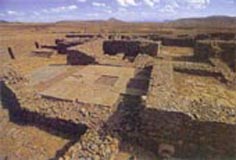
The image “http://www.selamta.net/Queen%20Sheba's%20Palace.jpg” cannot be displayed, because it contains errors.

The Queen of Sheba's palace isn't what it used to be. Its roof is long gone. Its grand entrance is but a memory. Yet the 3,000-year-old ruins remain, sprawling over thin-grassed farm fields in Axum -- once the capital of a great world power and today a dusty Ethiopian town where cows and children, goats and donkeys roam free.

The Queen lived well. It is still possible to stride across her vast flagstone-floored throne room, just one of 50 excavated chambers. The sophisticated drainage system features fish-shaped granite gargoyles. Several brick ovens line the large kitchen, and multiple stairwells indicate that there were many more rooms above.

Here, according to Ethiopians, a great dynasty was born. And, as all great dynasties should, this one begins with a love story.

As they tell it, the Queen of Sheba left Ethiopia only once, to visit King Solomon in Jerusalem. Solomon, despite being married, became smitten with the beautiful queen, so much so that upon her return to Axum she gave birth to his son, Menelik.

Menelik I took the throne when his mother died, roughly 1,000 years before the birth of Christ, and began a line of Solomonic rulers that endured with only a brief interruption until Emperor Haile Selassie, King of Kings and Lord of Lords, was deposed 31 years ago.

Menelik I is also, according to the Ethiopian Orthodox church, responsible for that country's possessing the greatest relic of the Judeo-Christian tradition. It seems that the king went to visit his father and somehow brought back the original Ark of the Covenant, previously kept in the great temple in Jerusalem.

The Ark is believed to hold the original tablets containing the Ten Commandments that God handed to Moses on Mount Sinai, and it is now said to be kept in Axum's Church of St. Mary of Zion. Only one elderly monk guards this treasure, which no one else may see.

St. Mary of Zion is one of thousands of Christian churches that dot the Ethiopian landscape. Christianity came early to Axum, and soon after A.D. 300 this new faith became the country's official religion. It has evolved little over the years, and its vivid churches are unlike any found elsewhere in the world.

This town's greatest attractions, however, are not its churches, but its stelae -- towering obelisks piercing the bright blue sky, the largest nine stories tall and cut from a single piece of granite. An even taller one, the height of a 13-story building and weighing some 500 tons, lies on its side, broken.

It fell, according to a written account, in about A.D. 850.

Each stele has an altar for sacrificial offerings and a false door. No one knows exactly when or why they were built. Some say they were meant to house spirits.

Axum today shows much and hides much. Only about three percent of this once-vast city has been excavated. Kids routinely pull ancient coins from farm fields. It is a place rich with the feeling of unsolved mysteries.

In fact, mysteries and miracles abound all along Ethiopia's Historic Route, with each of the three remaining stops reflecting a different era in the county's rich life.

The 11 rock-hewn churches in the town of Lalibela have often been called the "Eighth Wonder of the World." Like the monoliths at Axum, they are a UNESCO World Heritage Site. And, according to legend, they were each carved out of a single piece of rock at record speed, "as angels worked on them during the night."

The churches, many carved in deep trenches with only their roofs exposed, others cut directly into the rocks of caves, are all connected by a labyrinthine series of tunnels, paths and steep steps.

Each has been used continuously since the beginning of the 13th century. Most are decorated with a Star of David, underscoring the church's close kinship with King Solomon. One displays a very old painting of a black Jesus.

It is a remarkable place, as priests and monks in brilliant brocade vestments carry on a religious life that has gone on here, hidden among the hills and caves, for nearly a thousand years.

If the rock churches of Lalibela impress with their stark simplicity, the 29 churches and monasteries scattered over the islands of Lake Tana, headwaters of the Blue Nile River, delight with their vivid paintings in primary colors.

Abba Hailemariam Genetu, head priest at Azwah Maryam -- a circular church with a grass roof, located on an isolated peninsula -- greets visitors.

"This church," he says, "dates back to the 14th century. It is younger than most."

Genetu, the handsome Abba, or Father, speaks a Semitic language related to Hebrew, doesn't eat pork and performs ritual circumcision. He, like all Ethiopian Orthodox, practices a Christianity that is older, closer to Judaism, and far more exotic -- complete with ritual dancing and drumming -- than you'll find anywhere in America.

His remote church was constructed to protect the faith but also to preserve Ethiopia's ancient religious treasures -- ornate silver and bronze crosses, prayer sticks that recall Moses' staff and centuries-old illuminated manuscripts.

The church walls are covered with paintings which, over time, also have become treasures. One shows the child Jesus zooming down a board from a second story window, while less sacred children, who have tried and failed, lie scattered around the ground. Others illustrate the Holy Trinity: three identical dark-skinned, white-haired, white-bearded men.

If the rock churches are marvels of construction, and the churches of Lake Tana delight with their vivid paintings, the castles of Gondar simply astonish. Getchu Eshetu, my guide throughout Ethiopia, calls this site "Africa's Camelot," and he does not overstate the case. This palace complex looks as though it has been airlifted from medieval Europe.

In fact, the castle construction was begun by Emperor Fasiladas in 1632, when he declared the town of Gondar to be Ethiopia's first official capital.

His brown basalt palace was assembled using mortar and boasts four domed towers and battlements.

A Yemeni merchant who visited in 1648 wrote that it was "one of the most marvelous of buildings" he had ever seen, mentioning rooms trimmed in ivory and jewels, courtiers in fine brocade and thrones embroidered in gold.

Succeeding rulers constructed their own palaces. The 18th-century Empress Mentewab built a lovely one, where it is said she hosted Scotsman James Bruce (for five years!) when he came through searching for the headwaters of the Nile.

Other Europeans were less kind to the castles. Mussolini's Italians, who occupied Ethiopia from 1935 to 1941, used them as barracks. The British found out and bombed the buildings. Restoration is a slow process in a poor country, yet much of the complex remains, a reminder of the days when Gondar ruled a great empire.

As travelers complete the historic circle, it becomes abundantly clear that this mountainous country in the Horn of Africa contains treasures that should be on every history buff's wish list. Someday they will be. But for now it's still possible -- and lovely -- to experience Ethiopia's great sites without being jostled by hordes of tourists.

Ethiopia has no ATMs. However it is possible to withdraw cash against a credit card in the bank in the lobby of the Sheraton Hotel in Addis Ababa. Credit cards are not widely accepted, even in hotel gift shops. Take cash (bearing in mind that everything is quite inexpensive).

Tipping is ubiquitous, and it is best to accumulate birr, the local currency, in small denominations, as people in rural areas have trouble converting dollars into usable cash.

Post Gazette

Friday, May 27, 2005

Ethiopian Demonstrators Call for Transparency in Elections

Washington -- Thousands of Ethiopians peacefully demonstrated outside the State Department May 26 to call for full transparency in the vote counting that is taking place after the recent parliamentary elections in Ethiopia.

Carrying signs saying "Support free and fair elections in Ethiopia" and "President Bush, Secretary Rice, Ethiopians Demand Respect for Their Votes," a crowd of 1,500 and 2,000 people stood outside the State Department on a bright and sunny morning chanting for greater freedom and democracy in their country.

Several leaders of the Ethiopian community in the United States, as well as Coptic Archbishop Melke Tsadik, presented a document expressing their concerns to Anne Simon, representing the State Department's Bureau of African Affairs.

At the regular noon briefing, State Department spokesman Richard Boucher acknowledged the demonstrators and stated: "We are ourselves following very closely the developments in the Ethiopian election. The National Election Board has begun announcing results. It started on Saturday [May 21]. About 55 percent of 547 constituencies have reported, but all these results are preliminary. We don't expect official certification until June 8th. The next phases are vote counting, certification, and formation of a government."

Boucher added: "We've expressed clearly the view this needs to be done in a transparent and democratic manner. There are some international observer teams, including U.S. embassy personnel, who are monitoring the whole process through the end."

Several demonstrators told the Washington File their aim was to make the State Department aware of their fears that the Ethiopian government might skew official results of the election that they said had already seen more than 100 members of opposition parties elected to the national assembly.

A representative of the 2005 Ethiopian National Election Coordinating Task Force handed out a press release alleging that "as voting was coming to an end [in the May 15 elections], the Prime Minister declared an illegal state of emergency" and accusing the government of muzzling the media and attacking opposition poll watchers.

Awaiting the electoral commission’s final report, the statement called on the U.S. government "to support the stand by the Ethiopian people in their fight for the full realization of their rights. We ask you to support the struggle for democracy."

Former Ethiopian Foreign Minister Goshu Wolde praised the push by the United States for greater political inclusion in Ethiopia and explained that the demonstrations had two aims: "One, to impress on the Government of the United States, which has always insisted it is for democracy and liberty all over the world, that in Ethiopia liberty and democracy are now in jeopardy" -- with the hope that the United States would make sure "the electoral process comes to its logical conclusion."

Secondly, Wolde said, "We want the [U.S.] Government to see to it that the state of emergency, which has been imposed on the people, is lifted" so that the democratic aspirations of the Ethiopian people will be respected.

USINFO.STATE.GOV

Annan Meets Meles, Members of the Opposition

United Nations Secretary-General Kofi Annan arrived in Addis Ababa late on Wednesday, 25 May, after an overnight stopover in London.

On Thursday morning, he began the day by meeting with Alpha Oumar Konaré, Chairperson of the African Union, with whom he was to co-chair the Pledging Conference in support of the AU mission in Sudan, known as AMIS. He then met with NATO Secretary-General Jaap de Hoof Scheffer.

He also spoke with NATO Secretary-General Jaap de Hoop Scheffer, just prior to the opening of the conference at AU headquarters in Addis Ababa.

Addressing the conference, Mr. Annan described Darfur as one of the most pressing and destructive crises on the African continent today. He added that although the violence in Darfur has stabilized over the last few months, the situation remains unacceptable, as civilians are still at risk and subject to attacks. Moreover, the continued violence is increasingly targeted at aid workers, hampering their difficult work.

But, he said, where the AU mission is deployed, these things don’t happen.

An expanded AU force at full operational capacity will go a long way to ensuring that the great majority of civilians in Darfur can be protected from violence, he said.

Declaring that it is “a race against time”, the Secretary-General appealed to those gathered to provide the resources required without delay. The expanded Mission would include a total of more than 6,000 military personnel and 1,500 police and would cost over $465 million for one year. (See Press Release SG/SM/9890.)

Taking the floor a second time at the end of the conference, the Secretary-General took note of the generous pledges, which included strategic airlift, training and planning support -- all essential elements of the expansion. But he added that these contributions must be complementary if they are to be fully effective.

In addition to the support for the AU military force, the Secretary-General also emphasized the importance for the international community to support the crucial mediation effort of the African Union in the Abuja peace process. He added that the real solution is a political one and welcomed Mr. Konaré’s announcement that Salim Ahmed Salim, the former Secretary-General of the Organization of African Unity, will lead this process. (See Press Release SG/SM/9891.)

“A man of his experience and calibre and maturity, I hope, will lead the process to a successful conclusion in a relatively short time”, he said at a joint press conference with Chairman Konaré. “I plead with the parties, the Government and the rebels, not only to honour the ceasefire on the ground, but when they go to Abuja, to stay there, sustain the effort and reach an agreement.”

While acknowledging that the world could have moved much faster and acted earlier in Darfur, in response to a reporter’s question, the Secretary-General noted that access to the victims had improved over the past year and noted that compared to 1,000 relief workers who had been in the region a year ago, today there were 11,000 humanitarian workers bringing aid to some 2 million people in need as part of the UN-led aid effort in Darfur.

Following the conference, the Secretary-General went to meet with the staff of the Economic Commission of Africa (ECA) at the organization’s headquarters.

On Thursday evening, he met with Ethiopian Prime Minister Meles Zenawi at the latter’s office. The Secretary-General told reporters after the meeting that they had discussed issues of mutual interest, including the implementation of the Millennium Development Goals and the question of the border dispute with Eritrea. He said they also discussed the elections and developments in Ethiopia and also the next General Assembly where the discussion would be on United Nations reform.

The last meeting on Thursday evening was with Eng. Hailu Shawel, Chairman of the Coalition for Unity and Democracy (CUD), Dr. Berhanu Nega, Vice-Chairman of the CUD, and Dr. Beyene Petros, Vice-Chairman of the United Ethiopian Democratic Forces (UEDF).

The Secretary-General departed early on Friday, 27 May, for the Sudan.

ReliefWeb

Photo
Photo Courtesy: (AP Photo/UN, Evan Schneider)
In this photo released by the United Nations, U.N. Secretary-General Kofi Annan departs from Addis Ababa, Ethiopia Friday, May 27, 2005, on his way to Khartoum, Sudan where he will meet with Sudanese Foreign Minister Mustafa Osman Ismaill to address the ongoing humanitarian crisis in the Darfur region. (AP Photo/UN, Evan Schneider)

What is 'The Agazee' Militia Doing in Addis Abeba?

Days after declaring a state of emergency, zenawi has ordered a militia group called ‘The Agazee’ to be brought in to Addis Abeba. This militia group entirely composed of a Tigrean contingent from the Tigrae People Liberation Front is heavily armed with tanks, anti-aircraft missile, rocket launchers and other heavy equipment and such a show of force has made Addis Abeba now resembling a war zone occupied by enemy forces. It is also reported that zenawi has turned to his mentor and cousin, the shabia leader, for assistance. shabia agents are known to have entered the capital via Kenya to assassinate Oppositoin party leaders and activists.
It appears that the Anti- Ethiopian forces are once again coming together to suppress the movement for change, democracy and justice in our country.

The disproportionate show of force against un-armed peaceful civilian population in the our capital Addis Abeba is alarming and a disturbing development. One has to remember that, just before the election, zenawi made a reference to the Hutu militia group, the interahamwe, which was responsible for the massacre of half a million Tutsis in Rwanda. Zenawi is now short of openly declaring war on the population and his call up of the Agazee militia which is loyal to him, is yet another indication of his intention that he will not lightly give up power. One should ask why was the Agazee militia needed when it is obvious that there is adequate police and military force which is well suited to keeping order in the Addis Abeba, if that is what is required.

One should also ask why was a state of emergency needed immediately after an election which, generally speaking, was conducted peacefully with out reports of any major incident. What is the reason for zenawi to bypass parliament, literally taking the law in his own hands, and declaring a state of emergency. Incidentally, the parliament, in which zenawi rules the roost, has not objected to the action taken and have not even requested for discussion on the subject before or after it was implemented. The lack of any discussion or objection from these supposedly representatives of the people speaks volumes about the state of affairs in the Ethiopian parliament.

The truth of the matter is that, the people of Addis have overwhelmingly and emphatically rejected zenawi’s regime in the ballot box and this has been very hard to digest for the regime, they know that they are facing defeat throughout the country and they have to do something before they are totally humiliated by the people of Ethiopia.

The state of emergency is intended to suppress the people of Addis Abeba from expressing their joy following their victory and for realising that their votes have brought about a change in their city. One would have thought, it is their democratic right to express what ever emotions they feel, if they wish to. The state of emergency was directed at suppressing these emotions of joy. The freedom that they enjoyed at the demonstrations at Meskell square, only a few days before the election, was taken away from them by the state of emergency and by the threats and intimidation zenawi made when he issued his order on the public television. zenawi who was frightened by the power of the people that he saw on that day, knows that if he allows the people of addis to celebrate, people in other towns and cities throughout Ethiopia will follow suit and that will mark his demise.

The celebration was nipped in the bud. People’s celebration of victories has never suited the regime, as it always suspects that these celebrations would turn against the government itself. It has never trusted the people nor have the people trusted it.

The vote counts in other parts of the country, that were carried out in the presence of election observers, indicate that the voting trend is similar to what happened in Addis Abeba. Big wins have been reported for the opposition in all parts of the country except in Tigray. In Tigrai of course, the only candidates who took part were those from the Tigrae People Liberation Front. Members of the Opposition were chased out of the region to enable zenawi and company to have a free run. The election in Tigrae cannot therefore be valid, although the election board of the regime has approved it.

Otherwise, Bereket simon and co would not have made accusations of vote rigging against the opposition parties and frequently make requests for vote recounts had they not known that they have lost the election. It defies belief that they have to make such complaints when it is well known that their own Election board is running the vote counts and that in many cases, their own cadres do the ballot counts exclusively on their own without the participation of independent observers.

It is clear from this election what and who the people of Ethiopia have voted for. They have voted for democracy, justice and fairness and it has been a disaster for zenawi and company although they continue to announce that they have won the election.

If zenawi has the trust of the Ethiopian people and believes that he has won the election why is it, that the people have to be prevented from celebrating the victory of the regime. Why is it that the public have to be threatened with a display of military force. What is the purpose of the Agazee militia loyal to zenawi alone in the capital.

The actions taken by zenawi do not inspire confidence in him or his regime even to the ardent supporters.

The drastic repressive measures he is taking are clear signs of a regime that has lost the trust of the people and instead, has preferred to use armed violence to maintain power, and if the track record of the regime in respecting the will of the people and in human rights is to go by, then the chances of zenawi giving up power peacefully does not look encouraging.

The Ethiopian people should stand together more than ever and protect their hard won democratic rights and remain vigilant against enemies who wish to wreck havoc in our country.

Nazret.com

Why Can't Ethiopia's Elections Get the World's Attention?

Despite being Africa’s oldest independent nation, endowed with adequate natural resources and massive social capital, most people in the world associate Ethiopia with grotesque starvation and war. Indeed, these two unfortunate episodes have easily caught the attention of popular media such as CNN and BBC and the international community. But why is an equally important but rather positive episode not drawing as much attention?

On May 15, 2005, for the first time in the history of the country, some 25 million Ethiopians turned out to vote in the country’s historic parliamentary and regional assembly elections. The huge turnout was prompted by the participation of various political parties who presented an alternative political and economic agenda to people desperate for a change. International observers, including former president Jimmy Carter and his team, and the European Union team led by Ms. Anna Gomez, monitored voting in some of the polling stations. The observers admired the general discipline and peaceful participation of the public, while at the same time highlighting some of the irregularities in the polling stations that they visited.

Continued on ethiomedia.com

Implement Homegrown Solutions, Africa Urged

DIPLOMATS accredited to Zimbabwe and local academics have called on Africa to implement homegrown solutions and show dedication to gaining economic independence to match political independence.

The diplomats and academics yesterday converged at the University of Zimbabwe (UZ) for a symposium, the first of its kind in Zimbabwe, to mark Africa Day.

Speaking during the symposium, the Ambassador of the United Republic of Tanzania to Zimbabwe, Retired Brigadier Hashim Mbita, said May 25 was a landmark for Africa as it signified the political turnaround of the continent.

He said this was the day in 1963 in Addis Ababa, Ethiopia, on which the resolution to form the Organisation of African Unity (now succeeded by the African Union) and to rid the continent of colonialism was made.

allAfrica.com


African Union Commission Headquarters, Addis Ababa, the African Union

First Ethiopian Deputy Mayor in Israel Faces Problems on Job

Balinach Ayech went from being a bank official in Addis Ababa to washing floors in Kiryat Malachi, a working-class Israeli town near Ashdod. That was 14 years ago.

Today, she’s one of the town’s deputy mayors — the first Ethiopian ever voted deputy mayor of an Israeli city — but she’s involved in a clash with the town’s mayor, Moti Malka, that has prevented her from assuming her duties.

Ayech came to Israel with a firm belief in God, a determination to help herself and her people and gratitude to the Jewish Agency for Israel for bringing her to the Promised Land.

Ayech’s life in Ethiopia was unusual for a Jew: She was born in a village in the Gondar region but lived and studied in Addis Ababa and has an urban background. Her personal and professional success in Israel has been spectacular.

For the past five years, she has been the point person for her community in the town’s two health clinics.

“They come to me for everything,” she said. “Even after years in the country, many of the older people still cannot function in the system without help.”

The Jewish Agency provided Hebrew ulpan instruction for the immigrants, “but many people simply could not learn, and so they cannot work,” she said. “And many people did not go to ulpan because they never went to school in Ethiopia either.”

“The generation born in Israel writes and speaks Hebrew, of course, but many young people have other problems,” Ayech added. “Their families fell apart and they began with drugs and prostitution. So I have always had my hands full and worked very hard.”

Kiryat Malachi is home to about 3,700 Ethiopians out of a total population of 22,000. The city council chose Ayech as deputy mayor over another member of the community — but from there the picture gets cloudy.

“It should be beautiful, this story of the first Ethiopian deputy mayor, but it’s not,” said Yossi Perez, spokesman for the Kiryat Malachi’s mayor’s office. “This has become a case of dirty politics in Israel, and it’s too bad.”

JTA News

Allegations of Vote Rigging Fly in Ethiopia

Ethiopia's main opposition coalition said on Friday it will not accept election results for 84 seats that may hold the balance of power in the 547-strong Parliament, increasing already high tensions as the nation awaits official results.

Both opposition and ruling parties are claiming victory based on their own projections and trading charges of rigging. By Friday, the National Electoral Board had published results for 27 seats -- 22 of which went to the opposition, mostly in the capital, where the opposition is expected to win.

Many more provisional results from Sunday's voting -- seen as the most open and fair in Ethiopian history -- are expected on Saturday, with final, ratified results on June 8.

The National Electoral Board is investigating charges of major vote fraud, its chief, Kemal Bedri, said, asking political parties to provide evidence backing their claims. He added a revote will take place on Sunday in six out of Ethiopia's 31 000 polling stations, saying serious irregularities -- including a halt to voting -- were recorded at just those six stations.

The main opposition, though, wants a revote and a recount of ballots for 84 seats, claiming ballot boxes were stolen, its supporters were prevented from voting and counting was stopped as it became clear that its candidates were ahead.

The Coalition for Unity and Democracy is prepared to use all peaceful and legal means to challenge the results of the 84 disputed seats, said Berhanu Nega, vice-chairperson of the Coalition for Unity and Democracy.

'Grave consequences'
Beyene Petros, vice-chairperson of the opposition United Ethiopian Democratic Forces, warned of "grave consequences" if the results do not reflect the voters' will.

"The term 'grave consequences' is implying the kind of downfall previous Ethiopian governments have been facing by not properly assessing the developments of the population," Beyene said.

"A peaceful revolution is in the making and I think all of us can read this from a determined population on the streets of Addis Ababa that was standing for more than 10 hours to vote," Beyene said.

The opposition charges triggered conflicting accusations from the ruling Ethiopia People's Revolutionary Front, which ended an oppressive dictatorship in 1991.

Mail&Guardian

Ethiopian Demonstrators Call for Transparency in Elections

Thousands of Ethiopians peacefully demonstrated outside the State Department May 26 to call for full transparency in the vote counting that is taking place after the recent parliamentary elections in Ethiopia.

Carrying signs saying "Support free and fair elections in Ethiopia" and "President Bush, Secretary Rice, Ethiopians Demand Respect for Their Votes," a crowd of 1,500 and 2,000 people stood outside the State Department on a bright and sunny morning chanting for greater freedom and democracy in their country.

Several leaders of the Ethiopian community in the United States, as well as Coptic Archbishop Melke Tsadik, presented a document expressing their concerns to Anne Simon, representing the State Department's Bureau of African Affairs.

At the regular noon briefing, State Department spokesman Richard Boucher acknowledged the demonstrators and stated: "We are ourselves following very closely the developments in the Ethiopian election. The National Election Board has begun announcing results. It started on Saturday [May 21]. About 55 percent of 547 constituencies have reported, but all these results are preliminary. We don't expect official certification until June 8th. The next phases are vote counting, certification, and formation of a government."

Boucher added: "We've expressed clearly the view this needs to be done in a transparent and democratic manner. There are some international observer teams, including U.S. embassy personnel, who are monitoring the whole process through the end."

Several demonstrators told the Washington File their aim was to make the State Department aware of their fears that the Ethiopian government might skew official results of the election that they said had already seen more than 100 members of opposition parties elected to the national assembly.

A representative of the 2005 Ethiopian National Election Coordinating Task Force handed out a press release alleging that "as voting was coming to an end [in the May 15 elections], the Prime Minister declared an illegal state of emergency" and accusing the government of muzzling the media and attacking opposition poll watchers.

Awaiting the electoral commission's final report, the statement called on the U.S. government "to support the stand by the Ethiopian people in their fight for the full realization of their rights. We ask you to support the struggle for democracy."

Former Ethiopian Foreign Minister Goshu Wolde praised the push by the United States for greater political inclusion in Ethiopia and explained that the demonstrations had two aims: "One, to impress on the Government of the United States, which has always insisted it is for democracy and liberty all over the world, that in Ethiopia liberty and democracy are now in jeopardy" -- with the hope that the United States would make sure "the electoral process comes to its logical conclusion."

Secondly, Wolde said, "We want the [U.S.] Government to see to it that the state of emergency, which has been imposed on the people, is lifted" so that the democratic aspirations of the Ethiopian people will be respected.

allAfrica.com

Vikram Chatwal's Big Break with the Big B

It's going to be hotelier-actor-business tycoon Vikram Chatwal's big break - sharing screen with none other than Amitabh Bachchan.

Chatwal, who had earlier played a 30-second role in "Zoolander" and the lead in "One Dollar Curry", will now be seen in Apoorva Lakhia's "Ek Ajnabee" with the Big B and Arjun Rampal.

"Growing up abroad, my only connection with India was through the films of Amitabh Bachchan," Chatwal told IANS. "Each of his films were like a bit of India and I must have seen his films dozens of times, so acting with him is a great honour."

The Ethiopia-born, New York-based businessman is also doing Tanuja Chandra's "Hope And A Little Sugar" where he plays Anupam Kher's son who dies in the 9/11 terror attacks.

And early next year, Chatwal, dubbed "Manhattan's favourite playboy", will tie the knot with Delhi-based model and socialite Priya Sachdev, who is planning an acting career in Bollywood.

"We have many things in common," said Chatwal about his fiancée. "She has just been offered a role in a Hindi film. We discuss movies a lot and the common interest is really nice. It's great that she is looking at films too and we are bouncing boards for each other."

Chatwal said he too was not averse to joining Bollywood. "One should never say no to anything. If the right offer comes up, why not?"

But he is clear that he will not do a film with his bride. "I don't think that would really work out. I don't like mixing personal and professional lives," said Chatwal, who once dated Brazilian supermodel Gisele Bundchen, rumoured to be responsible for his famous 'G' tattoo.

Chatwal, who also has an elaborate tattoo of Guru Gobind Singh, has, in recent times, with a grin and sparkle, suggested that the 'G' was for the guru.

With his new chain of Dream hotels and the marriage, Chatwal said he was entering a new phase of life. "This is like a different plane," said the man, also called the "Turbaned Cowboy", who once used to zip around the world in rap mogul P Diddy's private organising giant parties.

He counts among his friends Leonardo DiCaprio and Johnny Depp.

But, for now, it's all Vikram Chatwal, the serious entrepreneur. "I want to build hotels in India, in Ethiopia where I was born. I love Addis Ababa. There is a lot of immigrant Sikh culture there.

"That's where my roots are and I want to fulfil my dream of building hotels there," said Chatwal, who was once declared Playboy's Most Eligible Bachelor, and is aiming to be the first Sikh billionaire.

It helps that he is heir to his father Sant Singh Chatwal's $750 million Manhattan-based Hampshire Hotels and Resorts and helps raise campaign funds for the Democratic Party and counts the Clintons as family friends.

"Ambition is a important part of me," smiled Chatwal, who is planning a 120-room luxury hotel in Times Square called Lamb's Club. "As is spirituality."

glamsham.com

Feeding Africa's Information Starved

Africa is starving - but this starvation has nothing to do with food. Rather it's a hunger for information - specifically academic writing and research. Finding any well-researched data on Africa, other than that churned out by the Western media or academic institutions, is nearly unattainable.

Due to a lack of resources, only a small quantity of materials produced by African researchers, are made available on the market. Or else, they collect dust on the shelves of African university libraries with little or no access for those who want to use them.

This is a concern that has preoccupied the minds of the academic librarians, intellectual property and ICT experts gathered in Johannesburg on the second day of the Commons-sense Conference under the theme: "African Universities and Digital Resources: How can we 'alleviate' this kind of poverty?"

One solution put forward is the effort made by the Database of African Theses and Dissertations (DATAD), a program of the Association of African Universities (AAU). The program aims at improving management and access to African scholarly work through abstracting, indexing and providing full text to theses and dissertations.

According to Mary Materu-Behitsa, Coordinator of the DATAD Project, eleven academic institutions from all over Africa have participated, allowing students, researchers and academics electronic access to works produced by African scholars. This also creates capacity in universities for the electronic collection, management and dissemination of academic pieces.

When DATAD - described as a landmark for research development in Africa - was launched in April 2003, 6,500 records were submitted to its database. That number has now grown to over 16,000.

Materu-Behitsa notes however, that copyright and intellectual property rights have posed challenges to the program. Since over 15 % of the work has been produced by African postgraduate students studying in universities in foreign countries, the research materials ordinarily carry the copyright of those universities, which, she said, normally have very stringent copyright laws. "Many African universities do not want to be sued, so they stay away from making the publications available electronically," Materu-Behitsa said.

So far, only Kenya's Kenyatta University has an international copyright statement on their theses and dissertations while most other academic establishments have only a vague stipulation of some kind of licence.

Another challenge is that the institutions are relatively restrictive. For instance, the University of Ghana Library stipulates that post-graduate theses are available for consultation in the library and are not normally available for loan, and never lent to individuals. Moreover, it is illegal to copy or quote from the work without the author's and the university's consent.

At Addis Ababa University in Ethiopia, the author/student's rights are totally ignored and the law says that all rights are reserved by the University and no part of the publication may be produced without having prior permission from the institution. And Zimbabwean law stipulates that the copyright vests in the author of the work.

It is against this backdrop of confusing and restrictive laws that the role of Creative Commons (cc) becomes paramount. Hussein Suleman, the second speaker at the session, explained that digital libraries run by educational and research institutions to archive documents that are owned or produced locally have become more popular in Africa.

Suleman says this means that Creative Commons has arrived on the scene just in time as an increasing number of 'right-holders' introduce licences on research outputs more than ever before. Suleman says this mechanism is more rigid than copyright laws.

"Since licenses must be formally defined and rigorous, the time for Creative Commons (cc) is now," Suleman stated. With cc, he noted, students or scholars have an opportunity to specify what is allowed in the use of their creations.

allAfrica.com

Israel Unprepared For Ethiopians

Though tens of thousands of Ethiopians are anticipating making aliyah, little has been done in Israel to prepare for their move.

Officials estimate that it will cost some $23 million for the immigration of about 20,000 Falash Mura, Ethiopians whose Jewish ancestors converted to Christianity but who have since returned to Judaism.

Beginning next month, plans call for 600 Falash Mura to make aliyah each month, twice the current level. At the new rate, it will take about two and a half years for the immigration to be complete.

The North American Jewish federation system, which is expected to fund the operation, hasn't yet begun its campaign.

Israel, too, is dragging its feet.

The Israeli Cabinet decided in February 2003 that Falash Mura who could prove a maternal link to Judaism could make aliyah.

Early this year, Israeli Prime Minister Ariel Sharon and some of his Cabinet ministers decided to double the monthly immigration rate. Sharon required an interministerial committee on the Falash Mura to report back to him by April 30 on budgeting and planning for the operation, according to Joseph Feit, past president of the North American Conference on Ethiopian Jewry, or NACOEJ.

The interministerial committee hasn't yet submitted its report; the group was scheduled to meet Monday, but the meeting was postponed. Israeli Interior Minister Ophir Pines-Paz, who chairs the committee, is slated to travel to Ethiopia at the end of June.

The expected aliyah comes amid other developments that could hinder the operation.

For one, Sallai Meridor, chairman of the Jewish Agency for Israel, which handles aliyah, will resign next month.

Meridor was one of the Falash Mura's greatest advocates, lobbying Sharon and other key officials to support the group's aliyah. It's not yet clear to what extent his expected successor, Ra'anana Mayor Zeev Bielski, will champion the cause.

Secondly, NACOEJ, which has funded community programs in Addis Ababa and Gondar since 1992 and which helps run compounds in those cities where many Falash Mura live while waiting to emigrate, may lose its operating ability in Ethiopia.

The Ethiopian government recently stopped the group from operating in Addis because it lacked a nongovernmental-agency license.

The group continues working in Gondar, where 70 percent of NACOEJ's activities are based, and has applied for NGO status. The application is pending, Feit said.

The Jewish Agency is slated to take over the compounds three months after the expedited immigration begins, or after it has a complete list of eligible immigrants. If NACOEJ's work is interrupted, however, the handover could become more difficult.

The $23 million tab for Falash Mura aliyah was presented May 10 to officials of the United Jewish Communities, the coordinating body for the North American Jewish federation system, by its overseas partners, JAFI and the American Jewish Joint Distribution Committee.

JAFI is budgeting more than $18 million for the operation; the JDC expects to pay $4.6 million. The figures do not include the cost of absorption once the Ethiopians arrive in Israel, said Mike Rosenberg, JAFI's director general of immigration and absorption.

At its board meeting, set for June 5-6 in New York, UJC is expected to approve a fund-raising initiative for the Falash Mura and to help absorb Ethiopians in Israel.

"UJC recognizes the imperative of this issue, and we are working on and examining it directly with the Jewish Agency and the Joint Distribution Committee," UJC spokesman Glenn Rosenkrantz said.

A few years ago, UJC worked with JAFI, the JDC, the Israeli government and Keren Hayesod, a body of world Jewish communities excluding North America, to raise money to help absorb Ethiopians in Israel.

Federations were asked to give an additional five percent above their previous overseas allocations to the Ethiopian National Project, said Richard Wexler of Chicago, UJC vice chairman.

But that campaign soon was overshadowed by a campaign to raise funds for Israel's needs during the intifada. With little advocacy for the Ethiopian National Project, Wexler said, the federations' response "was less than lukewarm.

Baltimore Jewish Times

Previous post: Ethiopian Jews Battle Poverty, Prejudice in Israel

Geldof: Live 8 Is Now On

SIR Bob Geldof yesterday confirmed he was planning a music spectacular 20 years after Live Aid, as revealed in the Mirror.

The singer is signing up the biggest names in pop to perform on July 2 for the Make Poverty History campaign.

He said: "Once more into the breach. What started 20 years ago is coming to a political point.

"What we do in the next five weeks is seriously, historically, politically important. We'll have all the biggest names we can find."

Coldplay, U2, Sir Paul McCartney and the Spice Girls are among those who will play at gigs in Washington and London.

Around 100,000 fans are due at the Live 8 concert in Hyde Park with a further 100,000 expected to watch the US one.

The televised event coincides with the G8 Summit of rich nations in Scotland on July 6-8.

Live Aid in 1985, watched by 1.5billion people, raised £60million for Ethiopia's starving.

mirror.co.uk

Ethiopia's Poll Results Delayed

The final results in Ethiopia's parliamentary election may be delayed because of hundreds of complaints and allegations of fraud filed by the candidates, the National Electoral Board spokesperson said on Friday.

The board was scheduled to release the final results of the May 15 election on June 8. New elections have already been scheduled for 16 of the country's 34 000 polling stations because of irregularities.

"Once investigations have been started they have to be completed and so we may be forced to extend beyond that time," said spokesperson Getahun Amogne. The election board has received complaints in almost 200 constituencies.

The main opposition party has lodged complaints in 139 of 527 constituencies, while the ruling party has raised concerns over irregularities in more than 50 seats. Getahun added the political parties will have until June 3 to provide evidence of fraud or their complaints will be scrapped.

Provisional results show the ruling coalition, the Ethiopian Peoples Revolutionary Democratic Front has 209 seats so far, with affiliated parties gaining a further 12.

But opposition parties have made huge gains from the 12 seats they hold in the current parliament of 547 seats, so far taking 142 of the constituencies counted.

Twenty seats are filled by appointment by the ruling party.

The European Union (EU) criticised the electoral board on Wednesday for delays in releasing the vote saying it raised the prospect of fraud. In a statement, the EU observers said the trickle of results, claims of victory by the government and the opposition, and the denial of access to the state-run media for government opponents was threatening the electoral process.

In Washington, scores of Ethiopians demonstrated on Thursday in front of the state department, demanding United States (US) action in response to alleged irregularities in Ethiopian parliamentary elections.

Some of the protesters accused authorities of a variety of misdeeds, including killing or jailing members of the opposition.

State department spokesperson Richard Boucher said he had no overall assessment of the conduct of the elections but agreed the charges need to be looked into.

Boucher said the US has made clear its view that the vote count and other aspects of the process "need to be done in a transparent and democratic manner".

Washington has a large Ethiopian community made up of people who fled the country in the mid-1970s after Emperor Haile Selassie was overthrown and their descendants.

africast.com

Thursday, May 26, 2005

15,000 Protesting Ethiopians in Washington, DC Call on US Help

Leaders of an estimated 15,000 protesting Ethiopians met with United States State Department officials on Thursday over Ethiopian government actions designed to reverse outcome of elections held on May 15 in the African nation.

Described as the largest Ethiopian political gathering ever, the protest rally, which raised about $100,000 in aid of the struggling opposition parties, was jointly organized by supporters of Coalition for Unity and Democracy (CUD) and the United Ethiopian Democratic Forces (UEDF), two major opposition parties whose huge election gains have attracted state-sponsored arrests, intimidations and killings throughout the country.

On Wednesday, the European Union (EU) declared in a statement that it may "have to make a public denunciation of developments to distance itself from 'the lack of transparency, and assumed rigging' of the vote." The EU also said the national electoral board has lost control of vote counting.

Meanwhile, Addis Ababa University students, who have voted overwhelmingly for the opposition throughout the country, have declared a one-day hunger strike on May 28 as a show of solidarity with the Ethiopian people as opposed to the ruling regime which stands accused of massive fraud. Since coming to power on May 28, 1991, the ruling regime has faced ever-growing opposition from the people, and the recent outcome of the May 15 elections stands out as a phenomenal symbol of popular response to the ruling party's morbid move to cling to power by any means possible.

ethiomedia.com

Ethiopia in Talks To Use Somali Port

A delegation from landlocked Ethiopia began negotiating with the self-declared enclave of Somaliland on May 26 to gain access to its Red Sea port of Berbera for trade.

Ethiopia wants to use the port in northwestern Somalia to move goods and fuel through Somaliland.

“The visit of the Ethiopian delegation is connected with the agreed usage of Berbera port by the Ethiopian businessmen for transit of goods and fuel to Ethiopia,” Somaliland Public Works Minister Said Sulub told a news conference.

Somaliland, a former British protectorate, broke away from Somalia in 1991 and has been a relatively stable enclave, which held its first multiparty election in 2003. It is not recognized internationally.

President Dahir Rayale Kahin of Somaliland signed an agreement with Ethiopia on August 2003 to legalize trade between the countries, establishing customs posts along their border and agreeing to cooperate in improving the roads linking the countries. Ethiopian Revenues Minister Getachew Belay led the delegation, which is expected to finalize a port agreement by May 28 and to assess the condition of the road network linking Berbera and Ethiopia.

Trade between the two countries is mostly limited to the stimulant leaf qat, fruit and vegetables exported by Ethiopia and foodstuffs and other commodities exported by Somaliland.

Outside Somaliland, the rest of Somalia has had no central authority since the ousting of former President Siad Barre in 1991 and has been devastated by warlords and their militias.

A transitional federal government was formed last year in neighboring Kenya, but has yet to return home.

DefenseNews.com

Ethiopian Children Easy Prey for Child Traffickers

It is estimated that each year, tens of thousands of poor, rural children in Ethiopia become victims of child traffickers, who promise them a better life and then sell them to face even greater poverty and suffering. In many cases, the children's horrific journeys begin, and end, at the main bus terminal in the Ethiopian capital, Addis Ababa, where VOA Correspondent Alisha Ryu begins her report.

An impatient bus driver honks the horn, trying to thread his vehicle through a crowd of people milling around in front of the entrance to the Addis Ababa bus terminal.

Inside the bus, several young boys peer through the windows, staring wide-eyed at the chaos around them.

Leaning against a tiny corrugated metal shack in a corner of the parking lot, 12-year-old Zemath Fanta watches the bus lurch into the terminal. He is filthy, clothed in little more than rags. He wonders aloud if the boys on the bus are in the same situation he was in more than a week ago.

"My grandmother put me on a bus with a man and sent me here, even though I did not want to go," Zemath said. He said he was brought to the capital to work as a weaver, but when he could not do the job properly, his employer abandoned him in the street.

There is no official statistic for how many children are trafficked each year in Ethiopia, but according to estimates from the International Organization for Migration (IOM) the number could be in the tens of thousands.

IOM's country program coordinator, Yitna Getachew, says unlike in some countries where organized crime or criminal gangs are behind child trafficking activities, traffickers in Ethiopia are mostly small-time middlemen who prey on poor, desperate families in rural areas.

About 85 percent of Ethiopia's 71 million people survive on subsistence farming, and more than 45 percent of those live in abject poverty.

The spread of HIV-AIDS has taken its toll on families, leaving many children without proper caretakers and vulnerable to traffickers.

"Brokers go into the rural areas and then deceive children; tell them that they will take them to big cities where they will have education, better life, and then sort of kidnap them and take them to the next big city where there are bus stations, and then bring them to Addis here," said Mr. Getachew at IOM. "But sometimes, arrangements are made with parents. They tell the parents that they could take the child to a city and place them with a good family where they would be cared for."

As in most countries, traffickers in Ethiopia make the most money sending victims overseas. Thousands of girls are shipped out each year to such countries as Lebanon, Saudi Arabia, the United Arab Emirates and Yemen, where they are in demand. For each victim, traffickers can earn as much as $800, an enormous sum in a country where many people earn just $100 a year.

To circumvent an Ethiopian law which regulates issuing passports for children under the age of 18, brokers regularly falsify birth certificates, identity cards, and other documents.

The brokers tell the girls that once they arrive at their destinations, they will be working as maids and nannies. But "buyers" often force many of the girls into prostitution or sexually abuse them at home.

The International Organization for Migration says the majority of child trafficking in Ethiopia occurs within its own borders.

Like Zemath Fanta, many young boys from rural villages end up in Addis Ababa where they are put to work, weaving popular white Ethiopian dresses called "shembas."

The boys are forced to work more than 10 hours a day and are barely given enough to eat. Those who cannot perform their jobs properly are simply abandoned in the streets.

For young girls, Mr. Yitna at IOM says work for them usually means toiling as domestic servants. "Most of them work more than 11 hours a day," he said. "The average pay is about 18 birr a month, which is just a little less than $2. Very few attend school. Even if they attend school, they do not have enough time to do their studying. They are beaten, sexually abused, not by the employers, but by the employer's children. So, it is really bad."

In recent months, the Ethiopian government has established a national task force with a mandate to protect children and to arrest and prosecute traffickers.

In Addis Ababa, non-governmental organizations have teamed up with the local police to find young victims of trafficking and to help reunite them with their families. There are now at least 10 police stations in different parts of the capital, where a police officer and a social worker cooperate on child trafficking cases.

VOA News

Dr. Tewolde's Latest Letter to His Friends

Tewolde Berhan Gebre Egziabher is the Director of Ethiopia's environment protection agency

Dear Friends,

This is 24 May, late in the afternoon. I have just received
my visa to enter Canada. Therefore, I will join most of you
in Montreal. If all travel arrangements work out, I will
arrive in Montreal on the evening of 26 May. I should then
join you for the last day of Liability and Redress. I hope
to arrive when the shape of our future international regime
on liability and redress is becoming visible to you all. I
will then join in and help my best to make it more visible.
Hopefully in one or two meetings after this, we will have it
firmly established among us to save us from irresponsibility
in genetic engineering.

Thank you all for your tremendous support. Multilateralism
was getting another knock from the State level, but the
grass roots multilateralism in which you have all been a
joint force has won.

May be we should keep grass roots multilateralism to keep
State arrogance in check. Give it more thought. I will also
give it more thought. I may come back to you on the issue.

Long live grass roots globalization!

Your very grateful friend,


Tewolde Berhan Gebre Gziabher

Electioneering For Personal Profit

President George W. Bush welcomes President Daniel arap Moi of Kenya, left, and Prime Minister Meles Zenawi of Ethiopia to the Oval Office Dec. 5. "We welcome two strong friends of America here; two leaders of countries which have joined us in the -- to fight the global war on terror; two steadfast allies, two people that the American people can count on when it comes to winning the first war of the 21st century," said President Bush during their meeting in the Cabinet Room. White House photo by Eric Draper
Photo Courtesy: whitehouse.gov
President Bush in 2002, meeting with leaders of Kenya and Ethiopia

Electioneering For Personal Profit


The above quote provides an on the scene recording and a perfect opening for an article whose intention is to shed some light on the phenomena of electioneering for personal profit in Ethiopia. This phenomena is exercised by a privileged view led by Meles Zenawi of TPLF and most of the outside world only hears about it once every three to four years. May be you have heard it by an other name; may be you did not as you may have been blinded by the skeletal pictures of famine victims news emanating from Ethiopia; or worse you may still be wondering whether all the electioneering money could be better spent on rehabilitating those affected by the famine. However it is imperative that we look in depth as to what happens in the name of ‘Democracy’ in Ethiopia once every four years.

As the above quote from a peasant who relies solely on food-for-work programmes for sustenance in Mekele, Zenawi’s hometown, demonstrates there are no elections in Ethiopia. There are exercises created and run to perfection by Zenawi and his cronies in Addis Ababa. These exercises are titled ‘elections’ however there is neither personal choice for whether one wants to run as a candidate or not, nor any resemblance of an election as those to be elected have already been nominated in secret and are to be acclaimed in public once the general populace implements Zenawi’s futile ‘election’ exercises. Any sane individual will be shocked if they saw their name on a ballot as a candidate when they have not even given any thought as to whether to run or not in an election. For those in the outside world and the West in particular, the aforementioned scenario of seeing oneself on the ballot when one have not given any thought is considered only as a hearsay and unimaginable. Even if it happens such a process will be deemed a fraud and farce. However for many in Ethiopia in general and in Ogadenia in particular such a scenario is real. Researchers at the NIHR, Norwegian Institute of Human Rights, who wrote the book Ethiopia since the DERG, report one such scenario where in Wukro constituency, for example, in the 2000 election one of the candidates was surprised to see her name in the list of TPLF candidates when she has neither been asked nor informed about her candidacy. In both the 1995 and 2000 elections and most probably in this year’s upcoming electioneering exercises in Ogadenia all candidates have been pre-ordained from Addis Ababa. There are documented cases where candidates have been barred from running by the head of the TPLF militia in many constituencies in Ogaden.

Any exercise where would be candidates are preordained by an elite few is not an election but a public fraud. Any ‘election’ where candidates are secretly confirmed of their place in a supposedly elected parliament even before the public has a chance to make their selections known is not an election but a farcical process. Any process where a militia head has the authority to bar a candidate from running in a supposedly free election is not an election but an electioneering for personal profit to prolong the status enjoyed by an elite few. This is what happens, is happening and will happen in Ethiopia and in Ogadenia for years to come if the outside world in general and the West in particular does not bring Zenawi’s electioneering exercises to an end. The money spent on this exercises will be better spent in preventing the manmade famines that are becoming a yearly fixture in Ethiopia in general and in Ogadenia in particular.

Ogaden Online Editorial
Jan 31, 2005

OGADEN ONLINE

Southern Sudan Cries Out for Humanitarian Aid

Before the signature ink dries on the comprehensive peace pact between the Government of Sudan and the former rebel Sudan People's Liberation Movement/Army, residents of the war-ravaged southern part of the country are expressing disappointment.

According to an international development consultant working in the area, Njunga M. Mulikita, the general public complaint is that they are not experiencing the peace dividend in tangible terms.

"When UN Secretary-General Kofi Annan tours Southern Sudan this weekend, he is likely to be greeted by crowds of people crying out for water wells, schools for their children and health facilities," Mulikita told PANA.

There is practically no infrastructure in southern Sudan. Everything was destroyed during the two decades of war between the Khartoum government and the SPLM/A.

Aid workers in the region were of the opinion that Annan's visit to Rumbek, the provisional capital of the SPLM/A should galvanise the international community to support the peace deal through a massive recovery and reconstruction programme.

"In my travels throughout Southern Sudan, the people I spoke with said they were simply tired of assessments carried out by UN agencies and NGOs.

"In one settlement, Koch, in the Upper Nile region, which I visited last month, the scarcity of water was so acute that over half of the women were suffering from severe diarrhoea.

"In another settlement, Kapoeta, which is not very far from the northern Kenyan town of Lokichokkio, recovery is hampered by anti-personnel and anti-tank mines because some of the heaviest fighting took place there," Mulikita explained.

Against this background, the incoming Government of Southern Sudan, to be formed by the SPLM/A faces huge challenges in addressing humanitarian, recovery and developmental needs of a war-weary population.

Presently, there is a massive influx of displaced persons who are going back to Southern Sudan.

However, officials in run-down municipalities such as Kapoeta, Koch, and Mayom wonder how the returnees would be accommodated given the devastated infrastructure.

"In Koch we were asked when we would arrange for a new well to be sunk to alleviate the suffering of women who must wake up as early as 03:00 hours to collect water.

"Water shortage in Koch is so acute that fights periodically break out at the settlement's sole water point," said Mulikita.

On this account, it is the hope of many people in Southern Sudan that Annan's forthcoming visit will draw international attention to the extreme humanitarian and developmental situation in the area.

Southern Sudanese want to see the pledges made at the Oslo donor conference being translated into improved water availability and living standards for women and children in all war-shattered settlements.

SudanTribune

Ethiopia Gets IFAD Loan to Support Coffee, Grain Farmers

Ethiopia and the International Fund for Agricultural Development (IFAD) have signed an agreement for a 27.2 million US-dollar loan to help minimise the effects of fluctuation in commodity prices on the incomes of poor smallholder farmers towards boosting food security in Ethiopia. .

The UN specialised agency said in a release Tuesday the programme estimated to 35.1 million dollars would be largely financed by the loan. .

The loan agreement was signed at the IFAD headquarters in Rome Friday by Mengistu Hulluka, Ethiopian envoy to Italy and IFAD`s President Lennart Båge. .

Ethiopia`s economy is agriculture-based with coffee, the largest export commodity, accounting for between 65 percent and 75 percent of the country`s foreign exchange earnings. .

The country is also a great producer of grains: namely teff (native to Ethiopia), wheat, barley, sorghum, millet and maize. .

But famine remains a frequent threat, with adverse climatic effects, particularly drought, reducing Ethiopia`s agricultural crops production. .

The fluctuation in agricultural outputs and commodity farming prices also has telling effects on smallholder farmers. .

The IFAD programme is expected to strengthen national capacity for market research, intelligence, policy analysis and planning. .

"Specifically, it will strengthen capacity to develop and implement support the Ethiopian government to develop appropriate national strategies and policies to stabilize commodity prices as well as improve develop linkages between smallholder producers, rural traders, artisans and the marketing chains," the UN agency said. .

The programme will also support the development of improved post-harvest technologies for processing, storage and transportation of agricultural outputs in a manner consistent with a liberalised market economy. .

With the latest loan, IFAD will have provided funds for 12 development projects in Ethiopia, totalling 190 million dollars, the release added.

AngolaPress

Win-Win Scenario for the Election

By S. Tesemma

Ethiopia is well and truly in a transitional phase from an autocratic system to a pluralist democracy. A mood of change has engulfed the nation most notably since the Ethio-Eritrean war (1998-2000). Perhaps the only good outcome of that disastrous and futile war was its service as a catalyst to galvanise pan-Ethiopian nationalism, civic pride and grass root activism as exemplified in the movement of Gash Aberra Molla and the Yichalal team spirit of the Ethiopian athletes both of which commanded respect and huge following.

Civic societies are emerging gradually and their sobering impact is being felt already. The private media, still nascent and faltering, is beginning to show signs of maturity. Multiethnic opposition parties have emerged, and they are learning how to iron out differences to merge or form workable coalitions. Institutions and mass organisations can now play host to facilitate debate and dialogue. Politicians are being forced to abandon the old leftist culture of denouncing opponents on trumped up charges, and instead to learn the habit of discussing issues and answering questions put to them by well-informed citizens. The ruling party, exposed and fractured by the war, besieged by internal and external pressure is induced to make administrative reforms and to inch its ways towards a more tolerant and transparent system of governance. Above all a system of nationwide periodic parliamentary election is taking root. It is also becoming more pluralist, transparent and fair.

These are all gains, early signs or blossoming buds of a democratic culture. The main beneficiaries are the Ethiopian people, mostly in urban areas. Increasingly they have better chance to be well informed, to ask questions, to express their wish and aspirations through debates, rallies and ultimately the ballot box. Increasingly they are learning to challenge arbitrary and unlawful decisions of the ruling party through the courts even when they know too well that the judiciary is too subservient to the executive branch of the state.

However, it should be emphasised from the outset that these gains are in their infancy. They are fragile. They need protection so that the democratisation process continues irreversibly. Politicians both in the ruling party and the opposition have historic responsibilities not to jeopardise them. The danger is too real in view of their well known propensities to resort to age old tricks, if the democratisation process works against their immediate interest. The post election tension amplifies this danger.

Presently the ruling party and the opposition are trading accusations. Both sides have been completely surprised, an element which presumably explains, at least in part, their rather rash and erratic post-election behaviour. The reasons for their surprise were different though: for the EPRDF it must have been the extent of defeat in urban areas; for the CUD and UEDF on the other hand it appears to be the extent of support not just in major urban centres, but also in rural and semi-urban constituencies in Amhara, Oromiya and SNNP. The dramatic outcome seems to have caused a knee jerk reaction from the ruling party, while it appears to have buoyed the anticipation of the opposition from becoming a credible parliamentary opposition to one of forming a coalition government.

Confident of winning most rural constituencies, and hence forming at least a government of comfortable majority, the EPRDF appeared to be unconcerned, at least initially, about the possibility and consequences of considerable loss of seats in urban constituencies. A lot was going on for the party. The economy is recovering from the consequences of the cursed war; some reforms of the civil service are being felt and appreciated; competent and pragmatic technocrats such as Girma Birru and Arkebe Oqubai have been busy transforming ministerial departments and the capital's administration, thereby changing not only the streets but also the public mood of the stakeholders; major achievements in the construction of roads, schools and clinics throughout the nation are winning the approval of the populous, while the changes in investment policies now looks to begin delivering dividends in attracting direct investment from foreigners as well as Ethiopians residing overseas.

Another source of confidence for the ruling party must have been the state of the opposition. The opposition was fragmented, and until the last four months in the run up to the election all efforts to form unity or a coalition for concerted action had ended up in disappointment. What could come out of coalitions which were just taking shape at the beginning of hustings? Like many observers the EPRDF must have thought that the opposition groups could not be seen as credible challengers.

It was from such background that the ruling party exuded confidence to allow a relatively more open and fair election campaign. Brimmed with certainty of beating the opposition fairly and squarely, they were willing to run the election under international observation, minus the notorious pro-democracy American institutions whom they suspected as prime movers and shakers of 'coloured revolutions' in several countries of eastern Europe, central Asia and Latin America. But, were their assessments unreasonable or wrong? Could their confidence be seen as based on misinterpretations of reality?

Non-partisan answers to the above questions can only be ambivalent. Yes, the EPRDF have a degree of success along the assessment outlined above. However, the problem was not in the veracity of what they reckoned, but rather in what they did not:

* they did not reckon the indignation people still feel at the perception of betrayal of Ethiopian interest in the 'settlement' of the Eritrean-Ethiopian conflict, of being 'winner' in the battlefront, only to become loser in the arbitration;
* they did not reckon the sense of frustration among the urban poor, the unemployed and underemployed, the sick and dying from HIV/AIDS related diseases;
* they did not reckon the despair among the rural poor eking out a living from plots of land which are fragmenting, shrinking and depleting in fertility;
* they did not reckon the anger of the entrepreneurial class whose ambitions for self and for the good of the national economy are blocked by corruption, party-affiliated businesses, and thousands of inept pseudo-Marxist cadres hostile to private enterprise;
* they did not reckon the resentment against their party owing to its cadres proverbial arrogance lashing out insulting remarks in response to public criticisms and legitimate grievances;
* they did not reckon that people remember the hundreds, if not thousands, of protesters who were killed in the recent past by their forces in broad day light in the capital, in Oromia and other regions;
* they did not reckon many such instances of injustice they dished out to the people and their own dissidents.

Boy were they wrong in underestimating the feelings of the people!

Viewed from the point of raw feelings of the people, the votes cast at the ballot box are expressions of protest. For this reason alone it would be wrong for the opposition parties to interpret the results of the urban ballot as votes of confidence in them. The opposition are an unknown quantity. They do not have track records of administration; nor do they have unified organisations comparable in size or resources to that of the ruling party. Whether the early success of their election campaign could be repeated in running city administrations and in consolidating their organisational unity remain to be seen. Such being the circumstances interpreting the votes cast for them as votes of confidence would be folly.

It would also be equally wrong for the ruling party to interpret the urban votes as mere expressions of anti-TPLF, anti-Tigaru sentiments. Two simple facts would suffice to show its fallacy. With the exception of the mayor of Addis, most or all notable candidates booted out were members of the ANDM or other affiliates of the EPRDF. The latter lost for being extremely unpopular, either for being incompetent or insolent, or both. One has only to remember the public statements, disdainful attitudes of Gennet Zewdie and Dawit Yohannes as an example to find out why they were/are unpopular. The mayor on the other hand is by far an exception, and he lost in the election for being a member of the unpopular TPLF/EPRDF, not for being ethnic Tigrawi. Only those with a jaundiced ethno-centric view could attribute the defeat to his ethnic background. While this article is being written, the rumour is that bills were posted in various places in Addis expressing public love and respect for the outgoing mayor, but that he had to go for belonging to the said organisations.

Secondly voting against TPLF/EPRDF does not mean voting against ethnic Tegaru or any other ethnic group for that matter. The view that TPLF is one and the same as the Tegaru is a self-serving view of ethnic nationalists who want to retain the monopoly of power they enjoyed over their ethnic community, a power ill gotten in the first place.

Given the assessment outlined above, this article likes to argue that the gains of democratisation achieved so far will be better insured if the final outcome of the election returns the EPRDF to power whilst giving the opposition parties over a third of the parliamentary seats, the number required to check any excesses of the majority. Such an outcome will provide a win-win scenario and bodes well for all concerned, most of all for the Ethiopian people. The ruling party with reduced majority will be more accountable, and will be forced to learn the wisdom of listening and ruling by consensus and persuasion. Taking advantage of this renewed chance it may try to speed up current reforms and developmental projects. Humbled by the current punishing results, it may also demand, hopefully, from its cadres some degree of honesty and decency whilst holding public offices; it may also opt to practice meritocracy rather than ethnic cronyism in making political appointments. In future free, fair and transparent elections, it can no longer count on ethnic loyalty, only on what it actually delivers and how it behaves towards the nation as a whole.

On the other hand, the said scenario will provide ample opportunities for the opposition to acquire parliamentary and administrative experience, major deficits on their part. Over the next five years they will also have time to consolidate the current organisational arrangements or transform themselves into one or two nationwide parties. Most importantly, taking advantage of the legitimacy and opportunities their formidable parliamentary positions provide, they can work assiduously to establish themselves among the rural poor. Knowing too well that for the foreseeable future forming a government through elections in Ethiopia will depend on winning the votes of the rural constituencies, they need to end the era in which the ruling party could regard these as its exclusive domain. Huge task is cut out for them, and they need to be busy to use the time and resources now available to them judiciously.

As things stand, the opposition parties are not ready yet to govern the entire country. Ethiopia can't afford to suffer from instability or administrative paralysis from infighting or interminable negotiations that are likely to follow from coalitions hastily formed from disparate groups of mainly young and inexperienced organisations. The opposition need time and opportunity to prove to themselves and the people who elected them that they constitute a formidable parliamentary opposition, that they have the discipline and commitment required to rule a huge diverse nation, and that they could translate their policies and promises into actions where they control city or zonal administrations.

It is time for the opposition to pinch themselves to wake up to the reality of their own circumstances and that of their country. It is time to remember the proverb 'kebero besew ij yamir, siyzut yadenagir' ('enjoying the sound of a drum is one thing, playing it another'). Ethiopia's stability, economic development and democratic future are all at stake. They should have the wisdom to see that it is in their best interest and that of Ethiopia, the country they love passionately, if they are contented with forming a formidable parliamentary opposition and urban administrations. The people have offered them unprecedented opportunity, with promises for more in coming elections. To squander them would not only be foolish but unforgivable.

ethiopiafirst.com