Showing posts with label africa. Show all posts

Wednesday, September 15, 2010

They don’t give a dam about development .

Source: Nathalie Rothschild (spiked-online)

Recently, a group of international NGOs has been leading a campaign to stop the building of the Gibe III hydroelectric dam in Ethiopia. They say the dam will disrupt the local ecosystem and the traditional lifestyles of ‘indigenous people’. So why are these groups, normally so vocal about geographical displacement, not up in arms about the tragedy that has unfolded in Ethiopia over the past few weeks? At least 19 people have died and 25,000 have been displaced because of floods.

The UN expects 300,000 to be affected by the floods in Ethiopia this month, and with the ensuing health risks, including malaria and Acute Watery Diarrhoea, as well as the severe damage caused to crops, livelihood assets and infrastructure, the impact of the heavy rains has certainly been devastating. One reason why this hasn’t been big news might be because Ethiopia experiences severe disruptions every year during the rainy season. Over 183,000 people were affected by floods in 2007, and the year before 600 people were killed, with a further 300,000 affected.

So why are NGOs like Survival International and International Rivers, which are spearheading the protest against Gibe III, not focusing their efforts on lobbying for investment in smart, ambitious and truly sustainable solutions to prevent the disastrous, and avoidable, effects of floods which every year displace, kill and plunge thousands into poverty? Why are they opposing large-scale development projects – like dams – that could contain the impact of both droughts and torrential downpours?

The answer is because their interest in preserving the lifestyles of ‘indigenous peoples’ really means that they do not want Ethiopia and other poor nations to modernise and have what we in the West have: industrialisation.

In the case of the anti-Gibe III campaign, NGOs say the dam will disrupt the lifestyles of tribes living along the Omo River, who depend on flood-retreat cultivation to (barely) sustain themselves. They say the dam will ‘end the [Omo] river’s natural flood cycle, on which the downstream communities have depended for growing food, fishing and grazing animals for thousands of years’. But this dependence effectively amounts to river-enslavement, with Ethiopians living at the mercy of nature rather than taming it.

The NGOs’ ostensibly humane impulse to protect ‘indigenous tribes’ in fact represents an abhorrent, paternalistic attitude to Africans, whom they treat in the same way that a zoologist might treat an exotic animal species. They regard these people as belonging to nature rather than to human society, as being part of a fragile ecosystem which should be preserved at the cost of social progress and material development.

International Rivers has described the Omo river as ‘the heartbeat’ of the region, and the floods as ‘nourishing’, providing the people living along the river’s banks with their most reliable sources of food. Yet these people live in abject poverty, with many suffering from chronic hunger. To describe their reliance on precarious flood-retreat farming practices as a sustainable, harmonious lifestyle is deranged.


The floods currently wrecking havoc in Ethiopia have been in the central and north-eastern parts of the country rather than in the southern Omo region. Yet this southern area has experienced devastating floods, too. In 2006, 400 people and thousands of livestock were washed away in the Omo delta and according to the United Nations World Food Programme, the floods there regularly inundate crops and have displaced over 20,000 people.

Ethiopia’s rivers will continue ruining lives unless controlled. Sure, dams are not risk-free and, like any large-scale development project, they force some people to move. Such people should of course be duly compensated. Yet instead of campaigning to halt development altogether, NGOs would do better to focus on ensuring that everyone benefits and no one is left behind. The environmentalists protesting against Gibe III do not seem interested in providing any alternative to people who live in abject poverty, or as they would say ‘who have traditional lifestyles’.

No doubt, a major objective for the investors in Gibe III, which, when completed, will be Africa’s second largest hydroelectric dam, is profit. In addition, however, the dam is expected to extend electricity access to large swathes of Ethiopia, a country where, in the year 2010, 70 per cent of the 80million-strong population still can’t even switch a light on in their homes. In addition, the impact of the droughts is expected to be reduced through new water storage capacities and the dam will regulate the flows of the Omo river, containing the impact of its annual floods.

It is not surprising that Ethiopians themselves find the Stop Gibe III Dam campaign patronising, insulting, irresponsible and dangerous. Some Ethiopians have launched a counter-petition called Stop the Campaign Against the Gibe III Dam of Ethiopia. It might not be the catchiest of campaign names, but anyone who believes that there should be more to life than survival would do well to support it.

Nathalie Rothschild is commissioning editor of spiked.

Tuesday, March 09, 2010

How Food and Water Are Driving a 21st-Century African Land Grab

farming

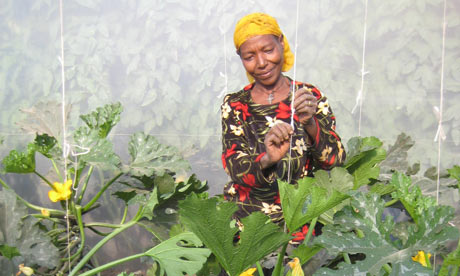
The Observer -- We turned off the main road to Awassa, talked our way past security guards and drove a mile across empty land before we found what will soon be Ethiopia's largest greenhouse. Nestling below an escarpment of the Rift Valley, the development is far from finished, but the plastic and steel structure already stretches over 20 hectares – the size of 20 football pitches.

The farm manager shows us millions of tomatoes, peppers and other vegetables being grown in 500m rows in computer controlled conditions. Spanish engineers are building the steel structure, Dutch technology minimises water use from two bore-holes and 1,000 women pick and pack 50 tonnes of food a day. Within 24 hours, it has been driven 200 miles to Addis Ababa and flown 1,000 miles to the shops and restaurants of Dubai, Jeddah and elsewhere in the Middle East.

Ethiopia is one of the hungriest countries in the world with more than 13 million people needing food aid, but paradoxically the government is offering at least 3m hectares of its most fertile land to rich countries and some of the world's most wealthy individuals to export food for their own populations.

The 1,000 hectares of land which contain the Awassa greenhouses are leased for 99 years to a Saudi billionaire businessman, Ethiopian-born Sheikh Mohammed al-Amoudi, one of the 50 richest men in the world. His Saudi Star company plans to spend up to $2bn acquiring and developing 500,000 hectares of land in Ethiopia in the next few years. So far, it has bought four farms and is already growing wheat, rice, vegetables and flowers for the Saudi market. It expects eventually to employ more than 10,000 people.

But Ethiopia is only one of 20 or more African countries where land is being bought or leased for intensive agriculture on an immense scale in what may be the greatest change of ownership since the colonial era.

An Observer investigation estimates that up to 50m hectares of land – an area more than double the size of the UK – has been acquired in the last few years or is in the process of being negotiated by governments and wealthy investors working with state subsidies. The data used was collected by Grain, the International Institute for Environment and Development, the International Land Coalition, ActionAid and other non-governmental groups.

The land rush, which is still accelerating, has been triggered by the worldwide food shortages which followed the sharp oil price rises in 2008, growing water shortages and the European Union's insistence that 10% of all transport fuel must come from plant-based biofuels by 2015.

In many areas the deals have led to evictions, civil unrest and complaints of "land grabbing".

The experience of Nyikaw Ochalla, an indigenous Anuak from the Gambella region of Ethiopia now living in Britain but who is in regular contact with farmers in his region, is typical. He said: "All of the land in the Gambella region is utilised. Each community has and looks after its own territory and the rivers and farmlands within it. It is a myth propagated by the government and investors to say that there is waste land or land that is not utilised in Gambella.

"The foreign companies are arriving in large numbers, depriving people of land they have used for centuries. There is no consultation with the indigenous population. The deals are done secretly. The only thing the local people see is people coming with lots of tractors to invade their lands.

"All the land round my family village of Illia has been taken over and is being cleared. People now have to work for an Indian company. Their land has been compulsorily taken and they have been given no compensation. People cannot believe what is happening. Thousands of people will be affected and people will go hungry."

It is not known if the acquisitions will improve or worsen food security in Africa, or if they will stimulate separatist conflicts, but a major World Bank report due to be published this month is expected to warn of both the potential benefits and the immense dangers they represent to people and nature.

Leading the rush are international agribusinesses, investment banks, hedge funds, commodity traders, sovereign wealth funds as well as UK pension funds, foundations and individuals attracted by some of the world's cheapest land.

Together they are scouring Sudan, Kenya, Nigeria, Tanzania, Malawi, Ethiopia, Congo, Zambia, Uganda, Madagascar, Zimbabwe, Mali, Sierra Leone, Ghana and elsewhere. Ethiopia alone has approved 815 foreign-financed agricultural projects since 2007. Any land there, which investors have not been able to buy, is being leased for approximately $1 per year per hectare.

Saudi Arabia, along with other Middle Eastern emirate states such as Qatar, Kuwait and Abu Dhabi, is thought to be the biggest buyer. In 2008 the Saudi government, which was one of the Middle East's largest wheat-growers, announced it was to reduce its domestic cereal production by 12% a year to conserve its water. It earmarked $5bn to provide loans at preferential rates to Saudi companies which wanted to invest in countries with strong agricultural potential .

Meanwhile, the Saudi investment company Foras, backed by the Islamic Development Bank and wealthy Saudi investors, plans to spend $1bn buying land and growing 7m tonnes of rice for the Saudi market within seven years. The company says it is investigating buying land in Mali, Senegal, Sudan and Uganda. By turning to Africa to grow its staple crops, Saudi Arabia is not just acquiring Africa's land but is securing itself the equivalent of hundreds of millions of gallons of scarce water a year. Water, says the UN, will be the defining resource of the next 100 years.

Since 2008 Saudi investors have bought heavily in Sudan, Egypt, Ethiopia and Kenya. Last year the first sacks of wheat grown in Ethiopia for the Saudi market were presented by al-Amoudi to King Abdullah.

Some of the African deals lined up are eye-wateringly large: China has signed a contract with the Democratic Republic of Congo to grow 2.8m hectares of palm oil for biofuels. Before it fell apart after riots, a proposed 1.2m hectares deal between Madagascar and the South Korean company Daewoo would have included nearly half of the country's arable land.

Land to grow biofuel crops is also in demand. "European biofuel companies have acquired or requested about 3.9m hectares in Africa. This has led to displacement of people, lack of consultation and compensation, broken promises about wages and job opportunities," said Tim Rice, author of an ActionAid report which estimates that the EU needs to grow crops on 17.5m hectares, well over half the size of Italy, if it is to meet its 10% biofuel target by 2015.

"The biofuel land grab in Africa is already displacing farmers and food production. The number of people going hungry will increase," he said. British firms have secured tracts of land in Angola, Ethiopia, Mozambique, Nigeria and Tanzania to grow flowers and vegetables.

Indian companies, backed by government loans, have bought or leased hundreds of thousands of hectares in Ethiopia, Kenya, Madagascar, Senegal and Mozambique, where they are growing rice, sugar cane, maize and lentils to feed their domestic market.

Nowhere is now out of bounds. Sudan, emerging from civil war and mostly bereft of development for a generation, is one of the new hot spots. South Korean companies last year bought 700,000 hectares of northern Sudan for wheat cultivation; the United Arab Emirates have acquired 750,000 hectares and Saudi Arabia last month concluded a 42,000-hectare deal in Nile province.

The government of southern Sudan says many companies are now trying to acquire land. "We have had many requests from many developers. Negotiations are going on," said Peter Chooli, director of water resources and irrigation, in Juba last week. "A Danish group is in discussions with the state and another wants to use land near the Nile."

In one of the most extraordinary deals, buccaneering New York investment firm Jarch Capital, run by a former commodities trader, Philip Heilberg, has leased 800,000 hectares in southern Sudan near Darfur. Heilberg has promised not only to create jobs but also to put 10% or more of his profits back into the local community. But he has been accused by Sudanese of "grabbing" communal land and leading an American attempt to fragment Sudan and exploit its resources.

Devlin Kuyek, a Montreal-based researcher with Grain, said investing in Africa was now seen as a new food supply strategy by many governments. "Rich countries are eyeing Africa not just for a healthy return on capital, but also as an insurance policy. Food shortages and riots in 28 countries in 2008, declining water supplies, climate change and huge population growth have together made land attractive. Africa has the most land and, compared with other continents, is cheap," he said.

"Farmland in sub-Saharan Africa is giving 25% returns a year and new technology can treble crop yields in short time frames," said Susan Payne, chief executive of Emergent Asset Management, a UK investment fund seeking to spend $50m on African land, which, she said, was attracting governments, corporations, multinationals and other investors. "Agricultural development is not only sustainable, it is our future. If we do not pay great care and attention now to increase food production by over 50% before 2050, we will face serious food shortages globally," she said.

But many of the deals are widely condemned by both western non-government groups and nationals as "new colonialism", driving people off the land and taking scarce resources away from people.

We met Tegenu Morku, a land agent, in a roadside cafe on his way to the region of Oromia in Ethiopia to find 500 hectares of land for a group of Egyptian investors. They planned to fatten cattle, grow cereals and spices and export as much as possible to Egypt. There had to be water available and he expected the price to be about 15 birr (75p) per hectare per year – less than a quarter of the cost of land in Egypt and a tenth of the price of land in Asia.

"The land and labour is cheap and the climate is good here. Everyone – Saudis, Turks, Chinese, Egyptians – is looking. The farmers do not like it because they get displaced, but they can find land elsewhere and, besides, they get compensation, equivalent to about 10 years' crop yield," he said.

Oromia is one of the centres of the African land rush. Haile Hirpa, president of the Oromia studies' association, said last week in a letter of protest to UN secretary-general Ban Ki-moon that India had acquired 1m hectares, Djibouti 10,000 hectares, Saudi Arabia 100,000 hectares, and that Egyptian, South Korean, Chinese, Nigerian and other Arab investors were all active in the state.

"This is the new, 21st-century colonisation. The Saudis are enjoying the rice harvest, while the Oromos are dying from man-made famine as we speak," he said.

The Ethiopian government denied the deals were causing hunger and said that the land deals were attracting hundreds of millions of dollars of foreign investments and tens of thousands of jobs. A spokesman said: "Ethiopia has 74m hectares of fertile land, of which only 15% is currently in use – mainly by subsistence farmers. Of the remaining land, only a small percentage – 3 to 4% – is offered to foreign investors. Investors are never given land that belongs to Ethiopian farmers. The government also encourages Ethiopians in the diaspora to invest in their homeland. They bring badly needed technology, they offer jobs and training to Ethiopians, they operate in areas where there is suitable land and access to water."

The reality on the ground is different, according to Michael Taylor, a policy specialist at the International Land Coalition. "If land in Africa hasn't been planted, it's probably for a reason. Maybe it's used to graze livestock or deliberately left fallow to prevent nutrient depletion and erosion. Anybody who has seen these areas identified as unused understands that there is no land in Ethiopia that has no owners and users."

Development experts are divided on the benefits of large-scale, intensive farming. Indian ecologist Vandana Shiva said in London last week that large-scale industrial agriculture not only threw people off the land but also required chemicals, pesticides, herbicides, fertilisers, intensive water use, and large-scale transport, storage and distribution which together turned landscapes into enormous mono-cultural plantations.

"We are seeing dispossession on a massive scale. It means less food is available and local people will have less. There will be more conflict and political instability and cultures will be uprooted. The small farmers of Africa are the basis of food security. The food availability of the planet will decline," she says. But Rodney Cooke, director at the UN's International Fund for Agricultural Development, sees potential benefits. "I would avoid the blanket term 'land-grabbing'. Done the right way, these deals can bring benefits for all parties and be a tool for development."

Lorenzo Cotula, senior researcher with the International Institute for Environment and Development, who co-authored a report on African land exchanges with the UN fund last year, found that well-structured deals could guarantee employment, better infrastructures and better crop yields. But badly handled they could cause great harm, especially if local people were excluded from decisions about allocating land and if their land rights were not protected.

Water is also controversial. Local government officers in Ethiopia told the Observer that foreign companies that set up flower farms and other large intensive farms were not being charged for water. "We would like to, but the deal is made by central government," said one. In Awassa, the al-Amouni farm uses as much water a year as 100,000 Ethiopians.

Tuesday, February 09, 2010

Africa Should Evolve Into "The New Breadbasket of the World"

http://msnbcmedia2.msn.com/j/MSNBC/Components/Photo/_new/g-cvr-091022-ethiopia-11a.hmedium.jpg

Reuters -- BAKO, Ethiopia/JOHANNESBURG (Reuters) - For centuries, farmers like Berhanu Gudina have eked out a living in Ethiopia's central lowlands, tending tiny plots of maize, wheat or barley amid the vastness of the lush green plains.

Now, they find themselves working cheek by jowl with high-tech commercial farms stretching over thousands of hectares tilled by state-of-the-art tractors -- and owned and operated by foreigners.

With memories of Ethiopia's devastating 1984 famine still fresh in the minds of its leaders, the government has been enticing well-heeled foreigners to invest in the nation's underperforming agriculture sector. It is part of an economic development push they say will help the Horn of Africa nation ensure it has enough food for its 80 million people.

Many small Ethopian farmers do not share their leaders' enthusiasm for the policy, eyeing the outsiders with a suspicion that has crept across Africa as millions of hectares have been placed, with varying degrees of transparency, in foreign hands.

"Now we see Indians coming, Chinese coming. Before, we were just Ethiopian," 54-year-old Gudina said in Bako, a small farming town 280 km (170 miles) west of Addis Ababa. "What do they want here? The same as the British in Kenya? To steal everything? Our government is selling our country to the Asians so they can make money for themselves."

Xenophobia aside, a number of organizations -- including the foundation started by Microsoft billionaire Bill Gates -- argue that Africa should support its own farmers.

"Instead of African countries giving away their best lands, they should invest in their own farmers," said Akin Adesina, vice president of the Nairobi-based Alliance for a Green Revolution in Africa (AGRA). "What's needed is a small-holder, farmer-based revolution. African land should not be up for garage sale."

FOOD FOR THOUGHT

Both sides of the debate agree on this much: a stark reality -- underlined by last year's food price crisis -- looms large over Ethiopia and beyond. The world is in danger of running out of food.

By 2050, when its population is likely to be more than 9 billion, up from 6 billion now, the world's food production needs to increase by 70 percent, according to the United Nations Food and Agriculture Organization.

In Africa, which for a variety of reasons was bypassed by the Green Revolution that transformed India and China in the 1960s and 1970s, the numbers are even more bleak. The continent's population is set to double from 1 billion now.

In all, the FAO says, feeding those extra mouths is going to take $83 billion in investment every year for the next four decades, increasing both the amount of cultivated land and how much it produces. The estimated investment for Africa alone is $11 billion a year.

For deeply impoverished Ethiopia, sub-Saharan Africa's second-most populous nation after Nigeria, even a fraction of those sums is unthinkable.

Yet with 111 million hectares -- nearly twice the area of Texas -- within its borders, the answer, in the government's eyes, is simple: Lease 'spare' land to wealthy outsiders to get them to grow the food. One unfortunate consequence of that thinking is Gudina and his little plot of maize are painted as part of the problem, rather than a potential solution.

"The small-scale farmers are not producing the quality they should, because they don't have the technology," said Esayas Kebede, head of the Agricultural Investment Agency, a body founded only in February but already talking about offering foreign farmers 3 million hectares in the next two years.

"There are 12 million households in Ethiopia. We can't afford to give new technology to all of them," he said, sitting in an office adorned with maps showing possible sites for commercial farms.

Indian agro-conglomerate Karuturi Global, whose involvement in Ethiopia so far has been exporting cut-flowers to Europe, has taken the hint, branching out into food production with a sprawling maize farm in Bako. Unlike with similar land deals elsewhere in Africa, the company insists crops will be exported only after demand is met in Ethiopia -- where 6.2 million people are said to be in need of emergency food aid because of poor seasonal rains.

"Our main aim is to feed the Ethiopian people," Karuturi's Ethiopia general manager, Hanumatha Rao, told Reuters, sitting under an awning at the Bako farm as hundreds of laborers harvested maize in the fields stretching up nearby hillsides. "Whatever we produce will go to the stomachs of the Ethiopian people before it goes to the international market."

ANOTHER AFRICAN REVOLUTION

While many governments have been busy courting foreigners, in most cases from Asia or the Middle East, to increase Africa's food output, small farmers like Gudina are not totally without friends.

An initiative backed by the Melinda and Bill Gates and Rockefeller foundations is aiming to kick-start an African Green Revolution, carefully avoiding the pitfalls that had engulfed previous such attempts.

In particular, Africa boasts a dazzling array of soil types, climates and crops that have defied the one-size-fits-all solution of better seed, fertilizer and irrigation that worked in Asia half a century ago.

Its perennial tendency to corruption and official incompetence has also played its part in keeping average grain yields on the continent at just 1.2 tons per hectare, compared with 3.5 tons in Europe and 5.5 tons in the United States.

AGRA's Adesina says sub-Saharan governments are slowly realizing the importance of small farmers, who account for 70 percent of the region's population and 60 percent of its agricultural output. But he urges governments to make good on a pledge six years ago to raise farm spending to 10 percent of their national budgets.

For its part, AGRA is pouring money into research institutes from Burkina Faso in the west to Tanzania in the east to breed higher yielding and more drought- and pest-resistant strains of everything from maize and cassava to sorghum and sweet potato. Keywords: FOOD/AFRICA

"We've been studying African agriculture for several decades and the message we keep getting back from farmers is: 'It's the seeds, stupid,'" said Joseph DeVries, director of AGRA's seed improvement division. "What you're planting is what you're harvesting."

As yet, the work -- carefully packaged as "Africans working for an African solution" -- involves only conventional breeding techniques, such as cross-pollination and hybridization, as genetically modified seeds remain prohibitively expensive for farmers subsisting on one or two dollars a day.

However, AGRA does not rule out a future role for GM food crops, a stance that has stoked fears it will inadvertently pave the way for U.S. seed companies into the continent beyond South Africa, the only country that allows widespread commercial use. It also accepts a need for chemical soil additives -- a source of concern to environmentalists -- although it stresses the importance of "judicious and efficient use of fertilizer and more intensive use of organic matter."

After 10 years of research, DeVries said, AGRA has developed, among other things, a cassava variety with double its previous yield and a hybrid sorghum strain that is producing 3 to 3.5 tons per hectare, compared with 1 ton before. It is also giving grants to rural shop-keepers to try to create seed distribution networks in countries that remain too small or inaccessible to attract interest from established commercial suppliers.

"There's huge demand for these new varieties, but there's just not nearly enough investment. It's logistics, and it's also capital," DeVries said.

CASH FOR CROPS

As ever in Africa, money -- or, rather, a lack of it -- is a major problem. According to AGRA's Adesina, only 1 percent of private capital on the continent is made available to farming, due to banks' concerns about loan collateral and a reluctance to deal with farmers who in many cases are barely literate.

However, the Green Revolution push has begun to attract some serious financial players.

With AGRA providing $10 million in loan guarantees, South Africa's Standard Bank, the continent's biggest bank, has earmarked $100 million over three years for small farmers in Ghana, Mozambique, Tanzania and Uganda. The pilot scheme suggests the bank is buying an argument slowly gaining traction: That Africa, a continent more renowned for war, famine and disasters, could and should evolve into the breadbasket of the world.

With less than 25 percent of Africa's potential arable land under cultivation, according to many estimates, and its current levels of yield at rock-bottom, it is a compelling, if distant, vision.

"The first step is improving the efficiency of small farmers in Africa," said Jacques Taylor, head of Standard Bank's agricultural banking arm in Johannesburg, seat of the gold on which most of South Africa's wealth has so far been based. "Can we get them to increase their yields from just over 1 ton to 3 tons to 5 tons? That's possible. It's not a dream. It's a reality."

LAND-GRABS AND GM'S TROJAN HORSE?

Even though Standard Bank says it is keen to expand the funding, if all goes well, there is a very long way to go before such financing makes a dent in the $11 billion the FAO says has to be invested in Africa each year.

"Do we need more of this? For sure. $100 million is really a drop in the ocean when you look at the funding needs," Taylor said. "But we'd like to think this is a step in the right direction."

As such, it seems inevitable Africa will have to adopt a dual-track approach to its looming food crisis -- rolling out the red carpet for more Karuturis, but also making life easier for Berhanu Gudina and his colleagues in central Ethiopia.

While it is hard to fault the thinking behind either strategy, critics of both abound.

Across the continent, foreign deals have been condemned as "land-grabs" negotiated between barely accountable administrations and outside companies or governments who care little about poverty or development.

In one notable case, in Madagascar, a little-reported million-hectare deal with South Korean conglomerate Daewoo contributed heavily to a successful popular uprising in March against President Marc Ravalomanana.

Elsewhere, from Sudan and its numerous Gulf farmer-investors, to Republic of Congo and a group of white South African commercial farmers, to Ethiopia and its Indians, land has become a hot political potato.

The prevailing view outside governments is that the little guys are being forced to make way for the mega-deal.

"It cannot just descend on them from the sky. It has to be done in consultation with the people who occupy the land," Ethiopian opposition leader Bulcha Demeksa told Reuters. "But the government is not doing that. It is just going ahead and signing agreement after agreement with the foreigners."

Similarly, AGRA's detractors look to unintended consequences of India's Green Revolution -- particularly the environmental damage caused by widespread fertilizer use and drying up of water tables -- to argue Africa should look before it leaps.

Furthermore, says Mariam Myatt of the Johannesburg-based African Center for Biosafety, if India's experience is anything to go by, a Green Revolution would leave Africa's farmers as dependent on banks and seed and fertilizer companies as they are now on seasonal rains.

"The Green Revolution, under the guise of solving hunger in Africa, is nothing more than a push for a parasitic corporate-controlled chemical system of agriculture," she said.

With Bill Gates also pumping funding into biotech research at bodies such as the African Agriculture Technology Foundation, Myatt said, AGRA might end up as the unwitting Trojan horse that eases GM crops -- and Western corporate interests -- into Africa.

"It will go a long way toward laying the groundwork for the entry of private fertilizer and agrochemical companies and seed companies and, more particularly, GM seed companies."

For a graphic to go with this story see: here

(Writing by Ed Cropley; Editing by Jim Impoco and Walter Bagley)

Thursday, October 16, 2008

Sowing the Seeds of Corporate Agriculture in Africa

grain truck

foodandwaterwatch.org -- Not all is well with agriculture in Africa. In addition to the buffeting from intermittent deluge and drought, the continent is facing pressure to replace its traditional small scale farming way of life with factory-style food production that emphasizes growing more of fewer types of crops, such as corn, cotton, and sorghum, for export around the world. Along with that, U.S.-based global agrochemical and grain trading corporations are pushing for greater use of specialty seeds, including genetically engineered varieties, and chemical pesticides and fertilizers to aid the growth of those monoculture export crops. These expensive seeds and other inputs would push many subsistence and small-scale growers of diverse types of food off their land and into already overcrowded cities.

This transformation is being marketed under the guise of helping African farmers produce more food to deal with hunger. Leading the way are the Gates and Rockefeller foundations, which are investing $150 million into their Alliance for a Green Revolution in Africa project, which they regard as essential for food security and enhanced economic development on the continent.1

On its website, the Alliance for a Green Revolution in Africa, also known as AGRA or the Alliance, describes itself as an organization led by Africans and as a “dynamic partnership working across the continent to help millions of small-scale farmers and their families lift themselves out of poverty and hunger. Alliance programmes develop practical solutions to dramatically boost farm productivity and incomes while safeguarding the environment and biodiversity. To achieve this goal, Alli-ance partnerships focus on key aspects of African agriculture: from seeds, soil health and water to markets, agricultural education and policy.” 2

The AGRA project leaders have so far played down the promotion and use of genetically modified seeds in their agenda. But an increasing number of critics fear this will change down the road after hundreds of African students are trained in biotechnology in the next two years. In July 2007, the Alliance stated that it was not against the use of genetically modified crops, but was, for the time being, “focusing on conventional methods because it could generate quick successes and fits within the regulatory framework of African countries.” 3

Josphat Ngonyo, who works with the Africa Network for Animal Welfare in Nairobi, Kenya, does not buy that line. Based on what he views as similarities between the workings of the Alliance and Monsanto, the world’s leading producer and purveyor of genetically modified seeds, Ngonyo foresees the effort pushing a combination of sophisticated and expensive hybrid and genetically modified seeds: “The way that the Gates and Rockefeller foundations have set up AGRA resembles a well known Monsanto format. AGRA purports to, among other things, finance and train small and medium sized agro-chemical dealerships, up to the village level, to make sure ‘improved seeds’ (read GMOs) have a smooth channel to flow to all farmers across the continent. But Monsanto must police its technology contracts, so its transfer from Monsanto’s labs to farmers is best controlled if the financier has a hand on the seed supply chain in Africa.” In short, this leads to corporate control of the seed supply, regardless of whether it is genetically engineered.4

The chances are good that this effort will sow as much environmental, economic, and social damage as the original Green Revolution that began in 1943 with the Rockefeller Foundation sending scientists to Mexico to develop higher-yielding varieties of wheat, maize, and other crops. It “…essentially dispersed cutting-edge U.S. agricultural technology – ‘dwarf” grain varieties, petrochemical fertilizers, and large-scale irrigation systems –– through much of Latin America and South-east Asia…Where the program took hold, grain yields surged, the prices farmers fetched for them on global markets plunged –– and small-scale farmers lost out…Unable to compete with larger operations –– which had the cash to buy the Green Revolution ‘package’ of hybrid seeds, fertilizer, and pesticides and could access lavishly funded irrigation projects –– smallholders began a mass migration to the cities in the 1960s and ‘70s. In Southeast Asia, long held up as one of the Green Revolution’s success stories, the urban population swung from 20 percent in 1975 to 35 percent in 2000.” 5

Poverty increased in Latin America and in Asia as a result of thousands of people being pushed off their land by those changes in agriculture and into cities unable to house or employ them.

GMO protesters in Africa
The same scenario could be in store for Africa as industrial agriculture takes hold: “In most large cities of Africa, the population is increasingly moving to unplanned settlements on the periphery where land is cheapest. In contrast to Latin America, however, this horizontal expansion does not involve job relocation, and it reduces the efficacy of major urban infrastructure such as piped water, electricity, sewerage, and roads. The projected average annual growth rate of the urban population in Africa during 2000 through 2020, 3.9 percent, portends that settlements will only deteriorate, particularly in the absence of sustained economic growth. Of equal concern to some commentators is the proliferation of ‘urban villages’ of 200,000 to 400,000 residents, large towns and small cities that typically lack the most basic amenities for a decent standard of living. The UN anticipates that in 2020 60 percent of urbanites in Africa will reside in cities with fewer than 500,000 residents, making urban development planning for small locales a continued priority.” 6

The risks to Africa of fully adopting industrial agriculture in general and GM seeds in particular include:

* transferring its food and farming decisions –– its food sovereignty –– to global corporations,
* losing ecological and agricultural diversity as genetically modified crop varieties spread through pollen contamination, and
* driving small- and medium-scale family farmers off their land because they cannot afford the expensive inputs, including genetically modified seeds, that industrial agriculture demands.

To head off such an outcome, first in Kenya and then across Africa, the Kenya Biodiversity Coalition of farmer, faith-based, consumer and other organizations, including Ngonyo’s Africa Network for Animal Welfare, is looking to strengthen the badly crafted and weak biosafety bill: “…the current bill is not comprehensive and inclusive i.e. the bill purports to ad-dress Biosafety issues whereas it actually focuses on Genetically Modified Organisms (GMO) to which, according to a re-cent media poll, 81 percent of Kenyans are opposed to. It excludes more pertinent Biosafety issues such as edible vaccines from crops and animals…” 7

The coalition argues that the proposed legislation fails to adopt the precautionary principle –– the concept that proponents of a potentially harmful technology must show that it will not cause harm before society allows for it to be introduced –– or to consider how genetically modified seeds and crops could harm human health, the environment, the indigenous seed supply, and food security.8

SIGN the petition
to help Kenyans safeguard against GMOs!

READ what Friends of AGRA are up to in Ethiopia.