Wednesday, October 31, 2007


Monday, October 22, 2007
Remembering Anita Roddick
 Transcript from Democracy Now!
In October of 2001, filmmaker Mark Achbar interviewed Anita Roddick in Seattle, Washington. Parts of this interview were used in Achbar's 2003 documentary film "The Corporation." I want to now play excerpts from the interview, beginning with Anita Roddick speaking about The Body Shop.
* Anita Roddick, interviewed by Mark Achbar. Parts of the film were used in the 2002 film "The Corporation". Thanks also to Chris Hives at the University of British Columbia Archives.
One issue particularly close to Anita Roddick's heart was the case of three political prisoners known as the Angola 3. This is the case of three Black Panther Party activists held in solitary confinement for over three decades in Angola, Louisiana's state prison built on the site of a former slave plantation. Gordon Roddick told reporters last week that he planned to continue his wife's work and hoped to help free two of the still-imprisoned Angola 3, Herman Wallace and Albert Woodfox. Herman Wallace paid tribute to Anita Roddick in a conversation with independent filmmaker Angad Bhalla last Saturday.
* Herman Wallace
Herman Wallace has spent 35 years in solitary confinement in Angola. Over the past six years, he has been exchanging letters with a young architect Jackie Sumell, who has designed his dream house, based on his letters. The project is on display at the Artist's Space in New York and is dedicated to Anita Roddick. The actual house is expected to be built in the Lower Ninth Ward in New Orleans, where Wallace's sister's home was destroyed by Hurricane Katrina. This is how Herman Wallace explained the significance of this house and Anita Roddick's work.
* Herman Wallace
RUSH TRANSCRIPT
AMY GOODMAN: Anita Roddick, the founder of the cosmetics firm The Body Shop, would have turned sixty-five years old tomorrow. She died last month of a brain hemorrhage. Roddick was a well-known environmental campaigner, a pioneer of cruelty-free beauty products. Her husband Gordon Roddick is holding a memorial service tomorrow in London with the theme "I am an activist."
Anita Roddick founded The Body Shop in 1976. The company gained enormous success and grew to 2,000 stores spanning fifty countries. All the while, Roddick remained a committed and outspoken activist. She was involved in a range of movements, from opposing animal testing, corporate globalization and war, to supporting indigenous rights and political prisoners. The daughter of Italian immigrants in Britain, she pioneered notions of social and environmental responsibility in the business world and was knighted Dame Anita Roddick by the Queen of England in 2003. Ralph Nader described her as "a glorious combination of character and personality who had her priorities high and wide enough to ask the most fundamental questions of big business and answer them by her deeds and her words."
In October of 2001, filmmaker Mark Achbar interviewed Anita Roddick in Seattle, Washington. Parts of this interview were used in Achbar’s 2003 documentary film called The Corporation. I want to now play excerpts from the interview, beginning with Anita Roddick speaking about her company, The Body Shop.
ANITA RODDICK: The company is still one of the most progressive companies that I know on this planet, but is it radical enough? And I don’t think it is. Now, I’ve always reflected the company as to my behavior. It’s always been my alter ego. And now, let me tell you, as I’m getting older, I’m getting more radical, and the company, shaped by the CEO, the new CEO, shaped by the board, a little bit more timid, you know, maybe not timid by the company standards, but a little bit timid for my standards. So it’s fine, but it’s, you know, not as brave as I would like it to be. And this isn’t on products, this isn’t on business analysis, this is on the issues.
We are a company who has dedicated our entire being to social and environmental change. This is our legal entity and in our articles of association and memoranda and for the advocacy of human rights work. So, you know, to have to take 60% or 70% of all our investors that come together and vote that out, so we’re pretty brave anyway. But we're not brave enough for me.
There is sacred territory in businesses, things that you never do. And what you never do is challenge another company. Really, this is not de rigeur at all. And I don’t know where this notion of protection of other companies' behavior, that it’s not on my patch, not on my ground, you can’t make any comment -- we never followed that. Body Shop, as under my, you know, tutelage, has always championed the causes and actually pointed the fingers at other companies.
And the two that we have been particularly strong and open about -- oh, it’s like David and Goliath -- one was Shell. For five years, we were campaigning against Shell and their business practices in Nigeria with effect on the Ogoni people. I mean, really, and it was not just campaigning, opening up the shops and corralling, writing letters to the media; it was dialoguing, going behind the scenes and talking to the CEO of Shell. And I so passionately believe in dialoguing. So this notion of confrontation, which is very sexy in the media, but which actually doesn’t work in many cases; you just have to find more -- the Socratean dialogue. You’ve got to -- that’s my belief.
So, Shell, because of its business practices in Nigeria, and especially, I think, its support with the judicious execution of Ken Saro-Wiwa. And very recently, with Esso in England, a sort of subsidiary of ExxonMobil. And the reason why is because they are probably -- in fact, the only corporation, one of the biggest, most powerful corporations on this planet that absolutely says there is no connection between fossil fuel and global warming. And more so than that, they’re the one company that puts so much money into Bush's campaign finances and also, in a disingenuous, dishonest way, you know, create these phony think tanks that say there is no connection, the so-called intellectual academic think tanks, which have no credence whatsoever. So that’s the reason why.
And the collection of corporate crimes that ExxonMobil has within its history is legend. The dilemma was that nobody wants to print them, except some amazing brave journalist in Sydney in the Sydney Morning Herald that will print this up. The rest are just -- no media wants to touch it. So, that’s the reason why.
MARK ACHBAR: Is there anything that will compel ExxonMobil to become more like Body Shop?
ANITA RODDICK: I don’t think any company will become more like Body Shop, because it’s a -- you know, I mean, we are -- we act like a not-for-profit organization, and we act more like a -- I don’t know, we act more like a, you know, NGO in many ways.
I think what will change them will not be the green washing from the press, you know, from the PR agencies and the wonderful ads they can do; it’s about the consumer revolt. A Shell official said to me in the protest in Seattle, he said to me, he said, “We don’t fear regulations any more. We control all regulations. What we fear is consumer revolt.” And customers are now saying not only do we want to feel sympathy with the product, we want to feel sympathy with the company who makes the product. So the behavior of a company is now what’s singly being looked at. So direct action specialists, people who are -- you know, who are just ethical watchdogs, are pointing their finger, I think, rightfully at the actions of business and will be using business as a target for protest now.
MARK ACHBAR: Do you think -- I mean, as you said, you’ve gone after Shell. Now, the public persona of Exxon and Shell are quite different. Shell actually portrays itself as part of the social responsibility movement, and Exxon generally doesn’t. As two big oil corporations, is there a qualitative difference between them, or do you feel that Shell's social responsibility image is just a marketing tool, because they’re on into -- I mean, they’ve moved on from Nigeria, as I understand, to Peru and the Amazon Basin?
ANITA RODDICK: Yeah. It’s really hard. You know, people say, “Well, what do I choose? You know, who do I choose to fill up my tank?” At the moment, you know, for me, ExxonMobil, because they're the only oil company that doesn’t make that connection between fossil fuels and climate change. You know, I just think, well, at least the others are saying, yes, there is a major connection, and we have to look for more creative ways of providing energy that maybe has to be sustainable or green energy.
Every one of these oil companies has an army, I’m hearing -- and that would be well to check -- to protect their interests. So the greatest increase in services now are small-scale armies. So in Nigeria -- I’ve just recently come back -- I’m still seeing hospitals where there’s no anesthetic; women are still having cesareans without any anesthetic; I’m seeing schools that haven’t been built; thousands of billions of dollars extracted from the oil owned by the Ogoni, I’m not seeing one penny going back into the Ogoni community. I just want to make my choices, and the least horrendous oil company, for me, are Venezuelan ones. So trying to find a Venezuelan oil company is not easy, but it’s there.
You know, when I look at these pharmaceutical industries and this oil industry, they have such a chance, they have such a chance of being so brilliant. You know, the money that they make could have gone into -- could still go into really great research into alternative energy, green energy, solar energy, wind energy, wave energy. It’s so visionary for them to have done that. They so can clear up their own mess. They so can give back to the community. It’s all about this need to maximize profits, and that’s the nub. If you can just not maximize it and just make profits that are, you know, healthy and give back, then you wouldn’t have this vicious differential between the poor and the rich. You wouldn’t have this revolting behavior that makes people revolt against you. You wouldn’t have this terrorism, this exacerbation of poverty. And that’s the bit that they don’t get.
The question is, how do you change? How do you get the system changed? How do you get people who have been brought up to believe that business, way of life, has to follow what they’ve been told has to follow, and usually, as I said, through the business school? There's only one way you can change that. You’re either forced to change by public outrage, or the second is by experiences. Your values change when your experiences change. Experiences change your values. If you could take two or three good men, and true, to visit what you have seen -- the children dying in the toxic waste dumps, the children born with no genitalia because of the pesticides in the tobacco fields -- if you could show them that, if you could show the financial institutions that, because CEOs actually are employed and they could be fired -- so really, it’s not the changing of a CEO; it’s the system that has to be changed. And until you get this change that money matters beyond everything else, and our only cultural value in our society now is economics, ’til that gets changed, I think you'll have a hard time changing.
So, I just want to hold people's hands and say, “Come and let me show you this stuff. Let me show you what’s worked.” How do you keep communities vital? You keep economic considerations, just [inaudible] of little initiatives within the community. And that’s what keeps it going, I believe. And it’s a hard one, because it’s time, it’s more thoughtful that way.
MARK ACHBAR: It gets so complicated. It sounds like you’ve given up on government.
ANITA RODDICK: Oh, I have absolutely given up on government. Government is economic government. Government isn’t -- it isn’t as I remembered it to be or, as a history teacher, how I taught it should be. It was -- when I was a kid, you know, government came in, they were elected because of education, because of safety, because of health. I think sort of budgets were sort of like on the last chapter of any discussion. Now it’s measured by the economic budgets, and we don’t measure -- we don’t care about the weak anymore. We don’t think that governments -- government, it’s got to go now.
It’s now, let’s bring business in to control everything, our education. You come to this country in America, and the corporatization of your educational system leaves me aghast. I mean, this -- businesses control educational thinking. And this is happening in England. Our tourism industry will be controlled at -- I mean, Coca-Cola owns the Library of Congress here. So, it’s a worry. And until we know, the public know, really what’s going on, it’ll happen, and it’ll wash over us, and nobody knows the truth behind anything.
So I don’t think government’s role -- I think it’s moribund. We’ve got a two-party system in England; you’ve got a two-party system here. We need a four-party system. We need more than 30% of people to get out and vote. So I think it’s not a system that works, and, anyway, it’s being shaped by too much money.
The dilemma with the corporations is they’re not regulated, and they're not penalized, and they’re not -- they're not -- they’re just not ever taken to court. Millions and millions of people died in Bhopal. Union Carbide still hasn’t given a penny in compensation. Thousands of miles of coastline was despoiled by the ExxonMobil -- the Exxon Valdez. Compensation amounts to nothing, compared to the amount of money that companies -- so we don’t criminally prosecute companies. And I think that if we could start criminally prosecuting companies, maybe their behavior would be a bit more controlled.
MARK ACHBAR: OK, I hear a bit of what I think is rhetoric, because you can’t say they’re simply not regulated. There are regulations, there are fines. I mean, Robert Weissman listed off for us the top hundred corporate fines. I mean, it’s limited. I would say they’re -- perhaps what we’re saying is that there isn’t sufficient regulations, or the fines aren’t enough, or it’s not adequate.
ANITA RODDICK: Well, I wouldn’t call a few million pounds worth or dollars worth of fines a regulation. I would ban them. You know, if they are a public-listed company, and they are conducting themselves in a heinous way, they should be thrown off the stock market. They should be -- what we don’t have is any regulations with teeth. They should -- that’s how they should be regulated. And, you know, I don’t understand, I really don’t understand, why that is too difficult to do.
You know, I think when you look at this country, it should be banned, any product coming to any country that has child labor or sweatshop labor. It just should be banned. End of story. I mean, if you can ban a woman for having two husbands, and if you can ban somebody from driving on another side of the road, you can do this. It’s the political will to do it. But mostly what is missing -- when you ask consistently, well, what is missing, what can we need to -- we need a spiritual regeneration. And I don’t mean hugging ourselves and sitting on a mounting and praying to a god or gods, or both. We need to polish that sense of outrage to say this is no longer allowed. That’s what we need to change.
MARK ACHBAR: There is this kind of compartmentalization -- I guess the word might be -- that seems to go on in the minds of people -- or working within the corporate environment somehow gives -- some people seem to think that they’ve got license to leave those values at home, because that’s -- because I don’t think those people are monsters at home. And you told a very compelling story about when you described some of the horrific harms to people that you observed as a result of toxic waste and the pesticides, and you -- this was the story that you related to the International Chamber of Commerce in Cancun. And I wonder if you could tell that story and try to give me a sense of the mindset of your audience.
ANITA RODDICK: I remember being invited to the International Chamber of Commerce some years back to do a talk, and I’m always invited, because, you know, I’m supposed to be a founder of a very interesting organization, top brand in the world and no advertising. You know, the question is, “What can she tell us? You know, she didn’t go to business school. I mean, she must have tripped, and this must've been a series of brilliant accidents. Well, let's see what we can learn. It’s going to be really cheap bringing her over.”
And I remember always going into these conferences and never telling people what I am going to say, because I usually travel. Before I go onto a conference, I spend time in the area. And I traveled with the Huichol Indians, and I saw the pesticides that are produced, that are scattered in those tobacco fields, and all the babies that were born with no genitalia as a result. And within the audience were a lot of the heads of tobacco companies in this particular International Chamber of Commerce. And I was showing the slides and telling the story.
And the most painful thing was their reaction. It was almost a coldless sense -- a bloodless sense of good manners. They clapped, they -- no reaction, no embarrassment, no shifting around in the chair, no -- you know, none of this. It was an acceptance: “Well, this is business. Hang on, you know, this is business. We’ve got business here. Now, come on, grow up. Now, you know, we’re business people. We have to be strong about this.” And it reminded me what Mahatma Gandhi said when he called this source of indifference is timid kindness, where you intellectually know that this is wrong, but that knowledge cannot move you to action, does not polish your human spirit to such outrage that you promise yourself you would never do these things, never be part of this.
And so, the question, which is a big conundrum for many of us, is, why do people who are good and true -- care for their kids, are good in the community -- why are they so careless? Is it racism? Is it easiest to say -- is that, you know, well, we don’t care that, because it’s not part of our local community; this is not a local problem; this is so far away that we can’t relate -- is it that? Is it because we have a language which approves of this? You know, we approve of this. This is a language of business. Is it maybe the clothes we wear? The minute we’re going into the office, we’re wearing these suits and these ties, this new coat of appearance that separate us from who we are as fathers and husbands?
Whatever it is, it is fashioning a schizophrenia in many of us, or many business people, that allow this to happen. I’ve never understood how people can go to church and pray and ask forgiveness, but never ask forgiveness about their behavior. I can’t get it. I don’t know what happens or what -- maybe there’s something in -- maybe it’s something in the breakfast cereal that stops people having a sense of empathy with the human condition or stops them being imaginative to know the responses of their actions. I am utterly, utterly confounded. I do not know why.
AMY GOODMAN: Anita Roddick, interviewed by filmmaker Mark Achbar for his documentary The Corporation. The interview was done in Seattle in 2001. Anita Roddick died last month. She would have been sixty-five tomorrow. Her husband is holding a rally in her honor in Britain tomorrow.
One issue particularly close to Anita Roddick's heart was the case of the prisoners known as the Angola 3. This is the case of three Black Panther Party activists held in solitary confinement for over three decades in Angola, Louisiana's state prison built on the site of a former slave plantation. Gordon Roddick told reporters last week he plans to continue his wife's work and hopes to help free two of the still-imprisoned Angola 3: Herman Wallace and Albert Woodfox.
Herman Wallace paid tribute to Anita Roddick in a conversation with independent filmmaker Angad Bhalla last Saturday.
HERMAN WALLACE: As a result of Anita Roddick's hard work -- and I can’t say enough about Anita. She was more than a proponent for me; she was family. I mean, when she was doing her work and even making [inaudible]. She was here visiting with me and Albert, with Albert and I. And this reporter [inaudible] was looking all over for her and didn’t know where she was. But she was in such of a hurry, you know, in order to take and raise the consciousness of the people, you know, around the interests that’s happening with the Angola 3. And right now, I think the Angola 3 is in a much better position than what we were prior to Anita's involvement, you know? Even Amnesty International, you know, has gotten deeply involved here as a result of her Anita’s insight.
AMY GOODMAN: Herman Wallace has spent thirty-five years in solitary confinement in Angola. Over the past six years, he has been exchanging letters with a young architect, Jackie Sumell, who has designed his dream house, based on his letters. The project is on display at the Artist's Space in New York and is dedicated to Anita Roddick. The actual house is expected to be built in the Lower Ninth Ward in New Orleans, where Wallace's sister's home was destroyed by Hurricane Katrina.
This is how Herman Wallace explained the significance of this house and Anita Roddick's work.
HERMAN WALLACE: What’s so important about this particular house is that it represents Albert, King and all the sisters and brothers who have suffered and continue to suffer at the hands of a racist system of injustice whose primary objective is to maintain us as a voiceless class. You know, so that’s what this house represents. That’s what it means to me. And I don’t look at it as a [inaudible], you know, just for Herman Wallace, but it speaks out for so many other political prisoners, you know, that are locked up -- Mumia, you know, and all of these brothers and sisters, man, that are -- and particularly those that are innocent in the prisons. So -- and we're going to reach out to them.
And that’s what Anita was trying to do. That’s why she was in such of a hurry, you know? She was not just a supporter of Albert and my freedom, you know? We became family [inaudible], you know? She knew her time among us was short, and in spite of her wealth, she suffered emotionally, you know, believing that she was not doing enough in raising the consciousness of the injustice, you know, being done to Albert and I. Every country she stepped foot on, you know, she spoke of the persecution and torture Albert and I continue to endure, not only within the state -- this state’s only maximum-security penitentiary, but within a solitary cage inside of this penitentiary. Man, this woman was in a hurry. You hear me? I love her so much, you know?
AMY GOODMAN: Herman Wallace, speaking from behind bars in Angola, Louisiana, about the late Anita Roddick, who was fighting for his freedom.

Monday, October 15, 2007
Bush Backs Ethiopia Leader as Terror War Trumps Democracy Push

Former House Majority Leader Dick Armey (Right)
Bloomberg -- In 1998, President Bill Clinton hailed Ethiopian Prime Minister Meles Zenawi as the leader of an African renaissance. Today, human-rights groups say his security forces are raping and murdering civilians while fighting insurgents seeking autonomy in the Ogaden region.
While the U.S. House of Representatives has passed a bill linking some Ethiopian military aid to support for human rights and democracy, President George W. Bush remains firm in his backing of Zenawi, 52, whom he considers an important ally in preventing al Qaeda from gaining a foothold in the Horn of Africa. Ethiopia is the latest example of the war on terror trumping Bush's goal of spreading democracy around the globe.
``Security concerns have prevailed as the thing that drives U.S. relations with Ethiopia at the moment,'' says Terrence Lyons, associate professor of conflict resolution at George Mason University in Virginia. The administration hasn't been willing to alter its ``strategic relationship on behalf of other goals and interests.''
In addition to the clash on the Somalia border, Ethiopia is waging a U.S.-backed war in the neighboring country to shore up an unpopular transitional government after ousting the Islamic leadership from the capital, Mogadishu. Thousands of residents have reportedly been killed and 400,000 displaced. Zenawi has also arrested and jailed some dissidents and members of the press.
African Issues
Bush opposes the House bill, which passed Oct. 2. While the measure may not trigger a demonstrable change in U.S. policy -- it has exemptions for peacekeeping and counterterrorism assistance and a national-security waiver -- the vote showcases Ethiopia when few African issues, save perhaps the war in Darfur, grab attention.
``When you start seeing the U.S. Congress engaging in efforts like this, it's a strong signal that something has gone really wrong in a country,'' says Saman Zarifi, an advocate with Human Rights Watch in Washington.
In July, Zenawi's government expelled the Red Cross and Doctors without Borders from the Ogaden region. The latter reported treating civilians who said they were beaten, shot and raped by Ethiopian security forces after several dozen soldiers were killed in a rebel attack on an oil platform.
`Abusive'
Ethiopia's troops are ``among the most abusive on the continent,'' Zarifi told a House panel before the vote on the legislation. While the Ogaden ``is not Darfur yet, it is probably only a few months away from sliding over the edge into a full-blown humanitarian crisis of massive proportions.''
Ethiopia is the second most-populous country in sub- Saharan Africa and one of the world's poorest, with GDP per capita of $160 according to the World Bank.
The Bush administration requested $481 million for Ethiopia in the 2008 budget, mainly for health, education, civil-society groups and economic-development projects. The total includes $1.5 million in military assistance and another $5 million in economic-support funds, some of which may be used for military aid.
The House bill would add $40 million over two years to support development of democratic institutions. The measure was referred to the Senate Foreign Relations Committee; no date has been set for consideration.
Jendayi Frazer, U.S. assistant secretary of state for African affairs, calls the measure ``one-sided'' and says it would ``constrain'' what Bush is able to do ``to manage U.S. government interests.''
`Political Process'
She says the Ogaden dispute is ``not something we can address,'' calling it a matter Ethiopia should deal with ``internally, through a political process.''
Samuel Assefa, Ethiopia's ambassador to the U.S., says the bill violates Ethiopia's sovereignty and is ``destructive to regional security.''
While acknowledging that ``democracy is unfinished business for us,'' he says the House ignored Zenawi's efforts at reform, including pardons for some opposition leaders. He blames the Ogaden rebels' ``active PR machinery'' for the reported crimes against civilians.
Ethiopia has hired former House Majority Leader Dick Armey and Armey's lobby firm, DLA Piper, partly to fight the legislation.
Armey's opponents include the Ogaden rebels, who sent a delegation to Washington last month. Abdirahman Mahdi, foreign relations secretary of the Ogaden National Liberation Front, said it ``will commit a mass rebellion'' if there's no international intervention.
Rallies
Ethiopian Americans, concentrated in the Washington area, are also lobbying hard for the bill. They have organized rallies and targeted letter-writing campaigns to lawmakers in cities including Atlanta and Dallas with significant Ethiopian constituencies.
Disputed elections in 2005 for Ethiopia's parliament and local councils helped galvanize the democracy movement after soldiers clashed with demonstrators alleging fraud. Nearly 200 people were killed, and several dozen opposition leaders and journalists were arrested.
Other members of the press have also been targeted. Nine reporters who were acquitted in April on anti-state charges face retrial in November. If convicted, they may get the death penalty, the Committee to Protect Journalists says.
Berhanu Nega, a 49-year old, U.S.-educated economics professor, was imprisoned after winning the race for mayor of Addis Ababa in 2005. He never took office and was released in July after 21 months in jail.
``The enthusiasm, the commitment for democracy in Ethiopia is unbelievable right now,'' he said after meeting with Representative Donald Payne of New Jersey, a leading sponsor of the House bill, during a visit to Washington last month. ``People are tired of living under tyranny.''
To contact the reporter on this story: Janine Zacharia in Washington, D.C., at jzacharia@bloomberg.net
Thursday, October 11, 2007

Dismissive Ethiopia Tests US Indulgence
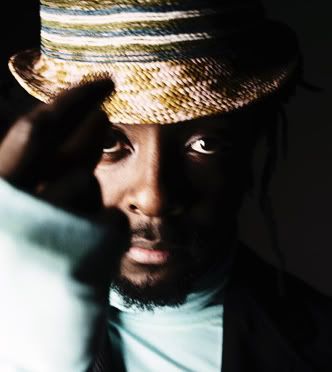 FT.com -- Meles Zenawi, Ethiopia’s prime minister, sat stiffly at a table as the frontman of the Black Eyed Peas strutted to the tip of the stage with the standard swagger of a Los Angeles hip-hop star.
Below the prime minister’s balcony, several hundred young Ethiopians surged towards the dreadlocked American, who told them: “Y’know, we celebrated the millennium seven years ago.”
Ethiopia did not. The country stuck with a form of the Julian calendar when the west switched to the Gregorian version four centuries ago, so its year 2000 rolled around only last month.
“Is this the real millennium?” the rapper asked, receiving an uproarious “Yes” from the crowd. “So, basically, when I go home, I can tell America to shut up?” he asked. The affirmative answer almost lifted off the roof.
The moustachioed Mr Meles did not flinch. But the exchange – a playful introduction to a song called “Shut Up” – captured something of the US’s increasingly testy relationship with Ethiopia: despite a six-year alliance with Washington, Mr Meles appears not at all inclined to move to America’s music.
Following the attacks of September 11 2001, the administration of President George W. Bush forged an anti-terror pact with Addis Ababa. It was predicated on Ethiopia’s formidable military and intelligence capabilities and its position as a Christian-led country surrounded by Muslim and Arab states.
But the relationship has begun to resemble many of Washington’s alliances with troublesome client regimes, based mostly on geopolitical interest. Ethiopia, which received $283m (£139m, €200m) of military and humanitarian aid from Washington this year, looks increasingly like Pakistan or Egypt: an awkward bedfellow that the US has to support for security goals but one that pursues its own, sometimes brutal, agenda regardless of American pressure.
When the US objects to Ethiopian policies – such as a crackdown on political opponents that killed scores of people in 2005 and a scorched-earth campaign against separatist insurgents this year – it is ignored. When America gives implicit acquiescence – as it did over the Christmas invasion of Somalia and Ethiopia’s bitter border dispute with Eritrea – the US goes through the motions of diplomatic pressure and claims to have been rebuffed.
But the wisdom of the alliance is now under scrutiny, particularly since the Democratic-controlled House of Representatives passed a bill last week that would force Ethiopia to improve democracy and human rights or risk losing substantial aid.
In public, Jendayi Frazer, the US State department’s top Africa diplomat, remains staunchly pro-Ethiopian and the White House is known to be unhappy with this month’s congressional bill. But one US official says Washington has “titanic arguments” on many subjects with Mr Meles, whose star has fallen since he was hailed in the 1990s as one of a new generation of African leaders. “The Ethiopians are very proud and very independent,” the official adds. “On security, they have supported us strongly, but they also take positions which are not in line with ours.”
In consequence, Washington has become tied to Ethiopia’s local agenda and entangled in a web of mutually reinforcing conflicts, which run from Eritrea to Somalia and cut through Ethiopia’s own ethnically Somali Ogaden region.
The alliance with Ethiopia, the regional powerhouse with a population of 77m, was supposed to achieve the opposite. The US wanted to hunt terrorists, including those suspected of blowing up US embassies in Kenya and Tanzania in 1998, to monitor links between al-Qaeda and local Islamists and to prevent the region disintegrating into a lawless incubator for extremism.
But the compromises Washington would have to make became evident after a disputed 2005 election, which revealed the Ethiopian regime’s authoritarian leanings. A total of 193 protesters accusing the government of rigging the election were killed in clashes with police. The violence was condemned by the US, which suspended aid temporarily, but Addis Ababa did not flinch.
The US quandary is also illustrated by Ethiopia’s invasion last year of neighbouring Somalia to oust the Islamic Courts Union, a group containing extremist elements that it saw as a threat. The US role in this invasion is still controversial, though American officials deny they encouraged the Ethiopians to act: “We specifically spoke with the government, [advising it] not to go into Somalia, because we didn’t know what the consequences would be,” says the US official.
But European diplomats dispute this account, saying the American attitude was ambiguous and was influenced heavily by those parts of the Bush administration charged with prosecuting the war on terror. The US embassy in Addis Ababa declined to comment on press reports that the US provided intelligence, military targeting and logistical support to Ethiopian forces during the invasion.
US Navy ships have since launched at least three precision air strikes inside Somalia, presumed to be targeting suspected al-Qaeda associates. But the invasion and its aftermath has done nothing to put an end to 16 years of violent chaos in Somalia.
Also going from bad to worse are Ethiopia’s relations with Eritrea. The neighbours fought a war in 1998-2000 that killed 70,000 people. Last month, Ethiopia threatened to terminate the pact that ended it, after years of intransigence over the demarcation of the two countries’ border.

Congressman Donald Payne
The US failed – or did not try – to persuade Ethiopia to comply with the 2002 ruling of an independent boundary commission. “I think that’s when we let it slip away, when we let Ethiopia break its pledge to agree to the outcome,” says Donald Payne, a Democratic congressman who co-sponsored last week’s Ethiopia bill. “I think we could fight the war on terror and still have respectful policies from our allies if we chose to. However, taking the policy of least resistance may be easier for the Bush administration.”
An embittered Eritrea reacted by launching proxy wars to undermine the Ethiopian government inside the country, where a growing number of armed groups oppose the Meles regime. The most formidable is the Ogaden National Liberation Front, which this year escalated a campaign for self-determination.
Ethiopia responded with a crackdown, which is a source of growing concern to the US. Ethiopian armed forces have been accused of extra-judicial killings, rape, torture and the burning of villages – charges that Ethiopia denies – and a United Nations fact-finding mission to the region said last month it had heard direct accounts of “serious violations of human rights”.
Suspicions have been stoked by the expulsion of the International Committee of the Red Cross from Ogaden and a decision to exclude Médecins Sans Frontières, another aid group. Washington has refused to place the ONLF on its terrorist list or describe the crackdown in Ogaden as counter-terrorism.
This puts it increasingly at odds with Ethiopia. An alliance of convenience is becoming less convenient for both countries by the day.
Subscribe to:
Posts (Atom)